
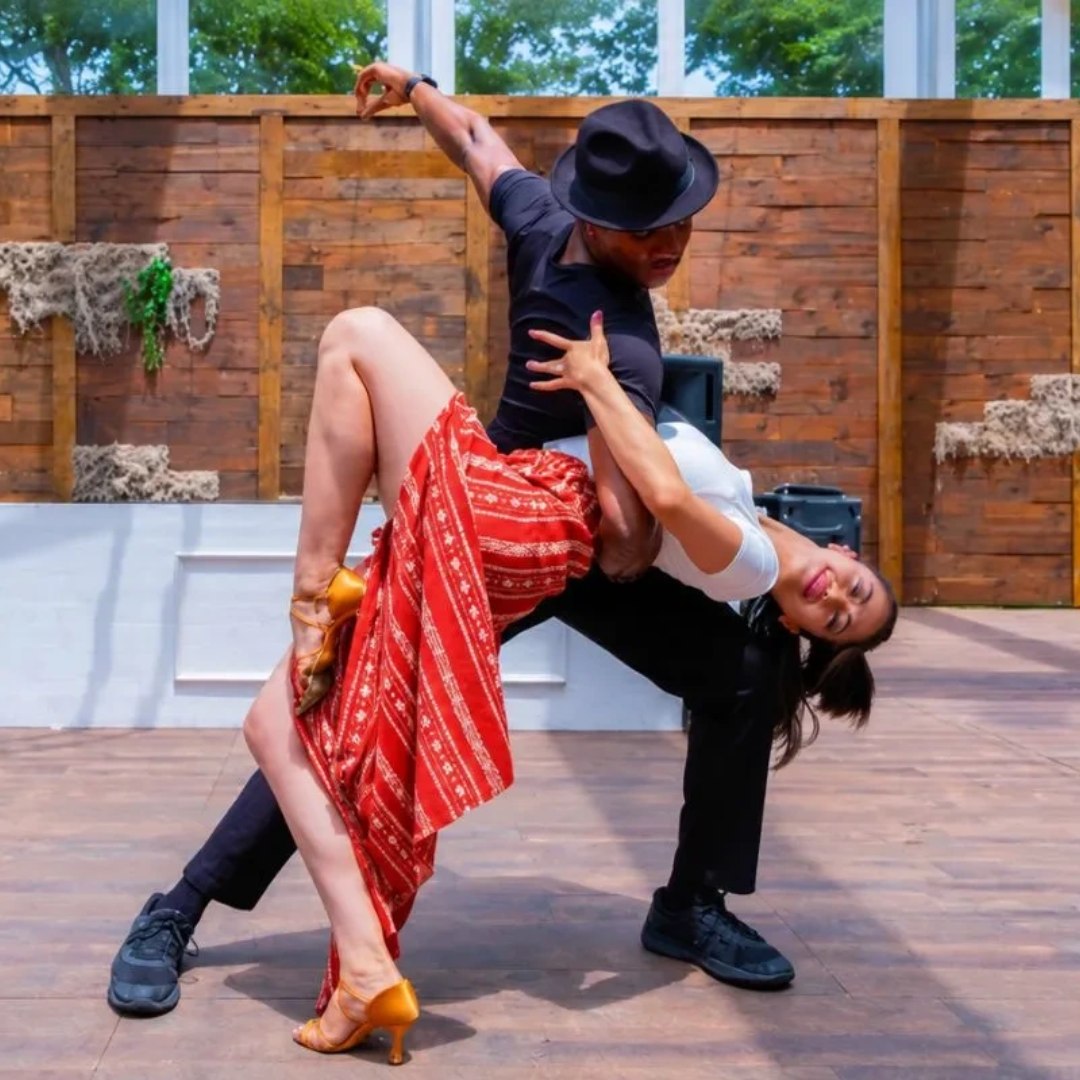
Dance classes for adults are designed precisely for people who have never set foot on a dance floor. Most adults who sign up think they’re too late, that they should have started a long time ago and that the opportunity has passed. There’s also a second fear that’s more specific, and it has to do with being the only one in the room who “doesn’t know anything,” while everyone else is already experienced.
You’ll find out that isn’t the case in this article, where we explain what starting with no experience at all looks like. You’ll learn how to decide between private lessons and group classes, which style is easiest to start with, and what to expect in your first class.
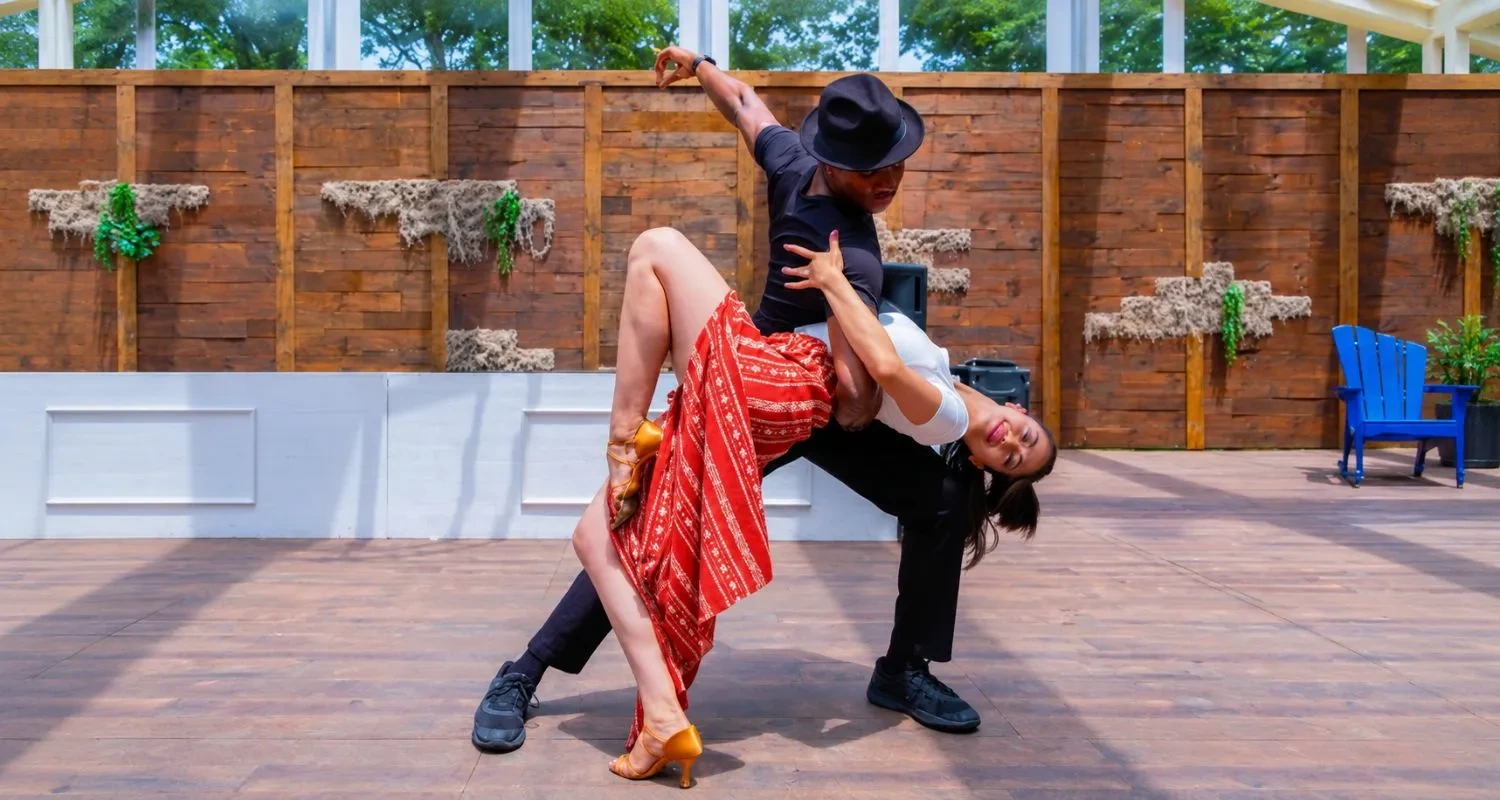
Can You Really Learn How to Dance as an Adult?
Yes, you can. At Concierge Ballroom, dance classes for adults are intended for people with no experience, and most adult students actually start from scratch.
Beginner programs don’t start with figures. The first thing you’ll work on is shifting your weight from one leg to the other, after which come a sense of rhythm and basic steps to music. Once you’ve mastered all of that, it’s time for turns and leading and following skills.
What you should know is that dance classes for adults also have a somewhat different pace than, say, those for children. Adults usually understand explanations faster because they learn through the logic of movement, not through sheer repetition. For that very reason, the first weeks can often bring more progress than many expect, even though the body still needs time for the movements to become automatic.
Is It Too Late to Learn to Dance as an Adult?
It isn’t. The brain’s ability to learn new movements stays active throughout life, and dance is one of the activities that “trains” it most directly.
A study published in the journal Frontiers in Human Neuroscience followed healthy adults with an average age of 67 through eighteen months of training. Participants who were learning new choreographies had significantly better balance at the end of the program than the group that did conventional fitness training.
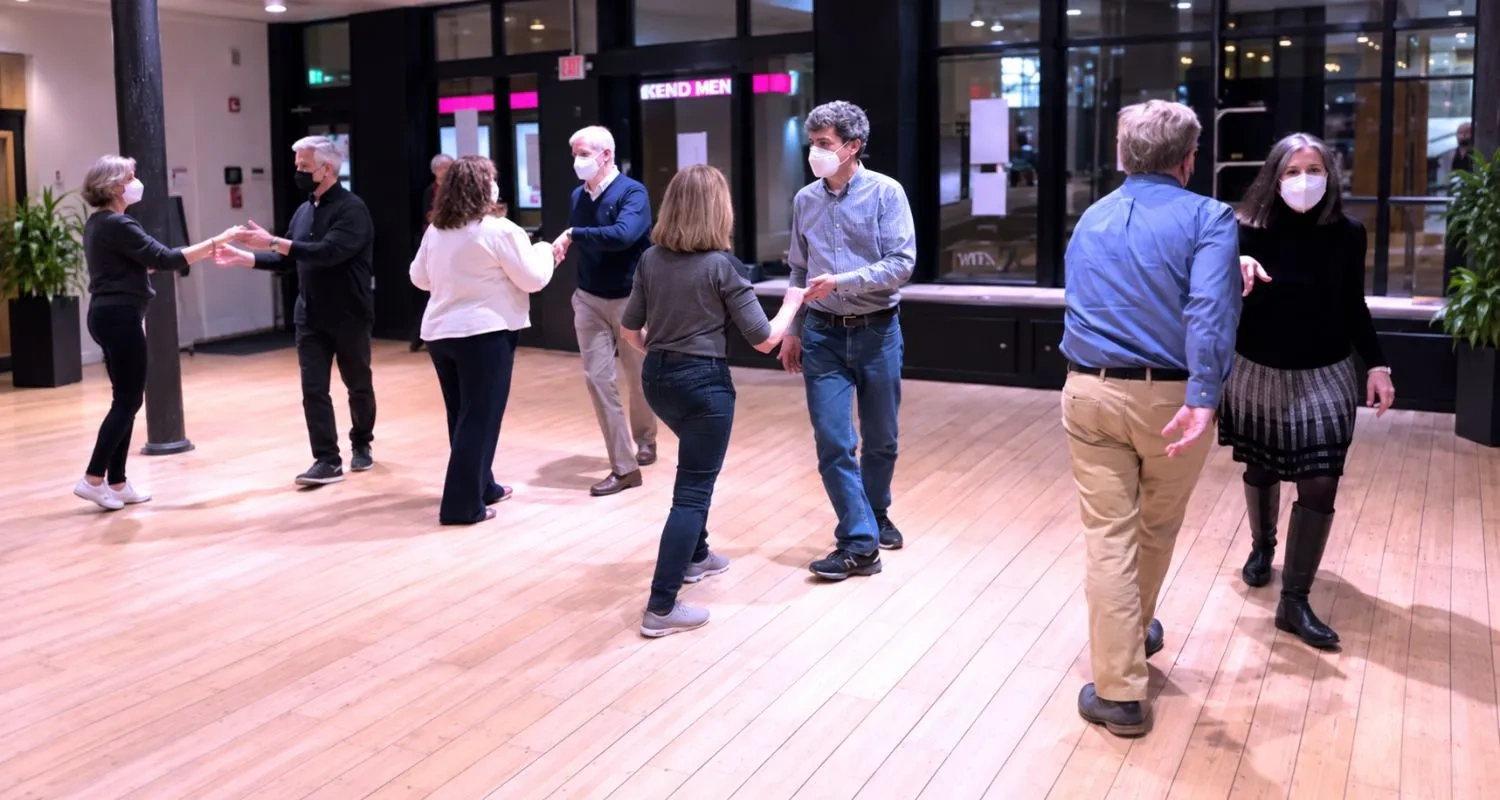
Specifically, if movement can be learned at that age, age is rarely the problem for someone starting dance classes for adults. The only thing that can be a problem is showing up regularly, but that factor applies to older and younger people alike.
What Adults Without Experience Worry About Most
Some of the biggest worries among everyone who decides to take dance classes for adults are the following:
- “I’ll be the oldest one in the room.” Beginner groups for adults usually bring together people ranging from their twenties to their sixties, and the age difference most often “disappears” after the first class.
- “I don’t have a partner.” And you don’t need one! A partner isn’t a requirement for signing up, because partners rotate in group classes, and in private dance lessons, you’ll dance with an instructor.
- “I’ll slow everyone else down.” Everyone in a beginner class learns the same step at the same time, so there’s no one for you to slow down. And you can’t slow down your instructor during a one-on-one lesson.
The first class goes by counting out loud and most students look at their feet. By the third or fourth visit, your legs usually start following the rhythm without counting, and your eyes finally come up.
And yes, you should know that the most common obstacle isn’t the step itself, that is, performing it, but the habit of controlling the movement with your head instead of your body.
Group Classes or Private Lessons: What Should a Beginner Choose?
The choice between group classes and private lessons depends on the goal you set for yourself, not on your current level of knowledge. Either way, both formats accept complete beginners.
Group classes let you practice with different partners, gain a range of experiences, and meet new people, which is one of the reasons many come to classes in the first place. Private dance lessons, on the other hand, focus solely on you, and the instructor can correct a mistake the moment it happens, instead of the same one being repeated for weeks, which is a very important factor.
Dance classes for adults are most often chosen on that basis, that is, whether you’re looking for company and a routine or a specific goal you’ll reach as quickly as possible.
| Group classes | Private lessons | |
|---|---|---|
| Learning pace | The group’s pace | Your pace |
| Partner | Rotation with others | Instructor |
| Focus | Basics and social application | Individual corrections |
| Style selection | Limited to the current program | Wide selection of styles |
| Best for | Meeting people and a regular routine | A specific goal and faster progress |
If you’re not sure what the group format looks like, see what group dance classes offer beginners. On the other hand, if you decide on individual sessions, we suggest you read the following article and get practical tips for your first private lesson.
Can You Combine Group Classes and Private Lessons?
You can, and it’s actually the ideal method because these two formats complement each other perfectly. A private lesson will help you build the basic elements, such as posture, shifting your weight, and mastering the basic step. A group class, on the other hand, puts that foundation to the test right away, because you practice with several different partners, and each of them reacts a little differently.
Combining these two methods in dance classes for adults usually means one private session per week alongside one group class, but essentially the ratio depends on how quickly you want to progress.
What Is the Best Dance to Learn as an Adult?
There’s no universal answer to this question, but for adults with no experience, Bachata is usually the most accessible to start with, because the basic step comes down to a few simple movements.
Still, for complete beginners, the following four styles are most often recommended:
- Bachata – the simplest basic step and a slow tempo
- Salsa – faster, but it’s danced to the same eight counts, which is why the rhythm is picked up quickly
- West Coast Swing – the most flexible, it goes with music you probably listen to anyway
- Rumba – a slower Latin dance, but good preparation for other ballroom styles
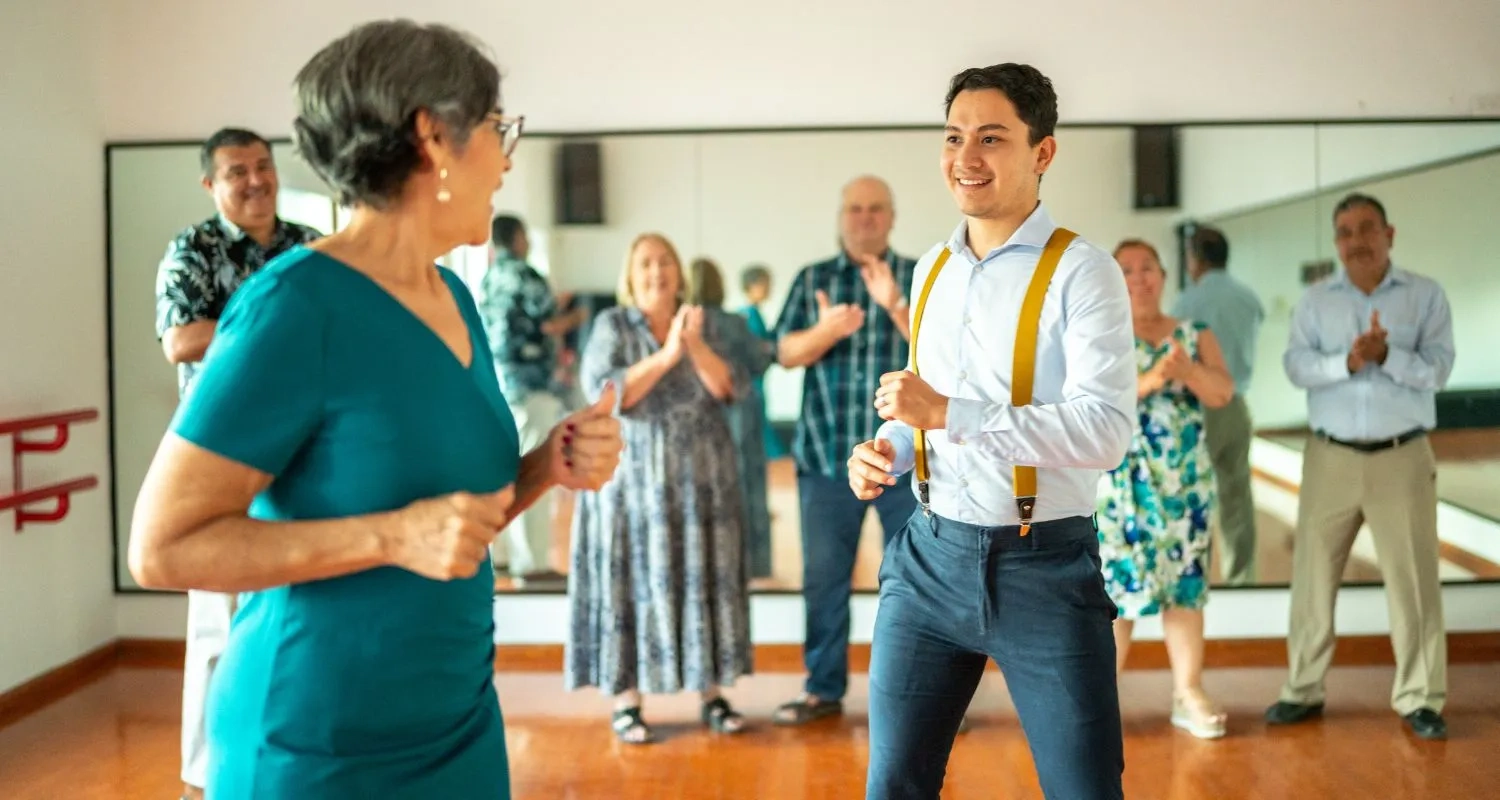
What you should know is that the group class and private lesson offerings aren’t the same, so before signing up, be sure to check which styles are currently on the schedule. If you’re still undecided, we suggest you read the following article and find the dance style that best suits your personality.
What Happens in Your First Dance Class?
The first class at Concierge Ballroom covers four stages, which are:
- Consultation – we talk about your goals
- Basic step – one step, broken down into counts and repeated without a partner
- Working with a partner – the same step in a pair
- Repeating to music – all of it together, in time with the music
You can try a few dances in your first class, so you get a feel for each style.
Do You Need a Partner or Dance Shoes to Start?
You don’t need a partner. As we’ve already said, couples, individuals and groups come to our studio, and whoever comes alone dances with partners who are free or with an instructor.
Dance shoes aren’t a requirement for your first class either. Footwear with a smooth sole is enough, and it’ll let you perform all the movements without catching. You can buy dance shoes once you’re sure you’re staying longer than a few classes. Until then, come in whatever you already have and don’t think about it.
Where Can I Find Dance Classes for Adults in Philadelphia, PA?
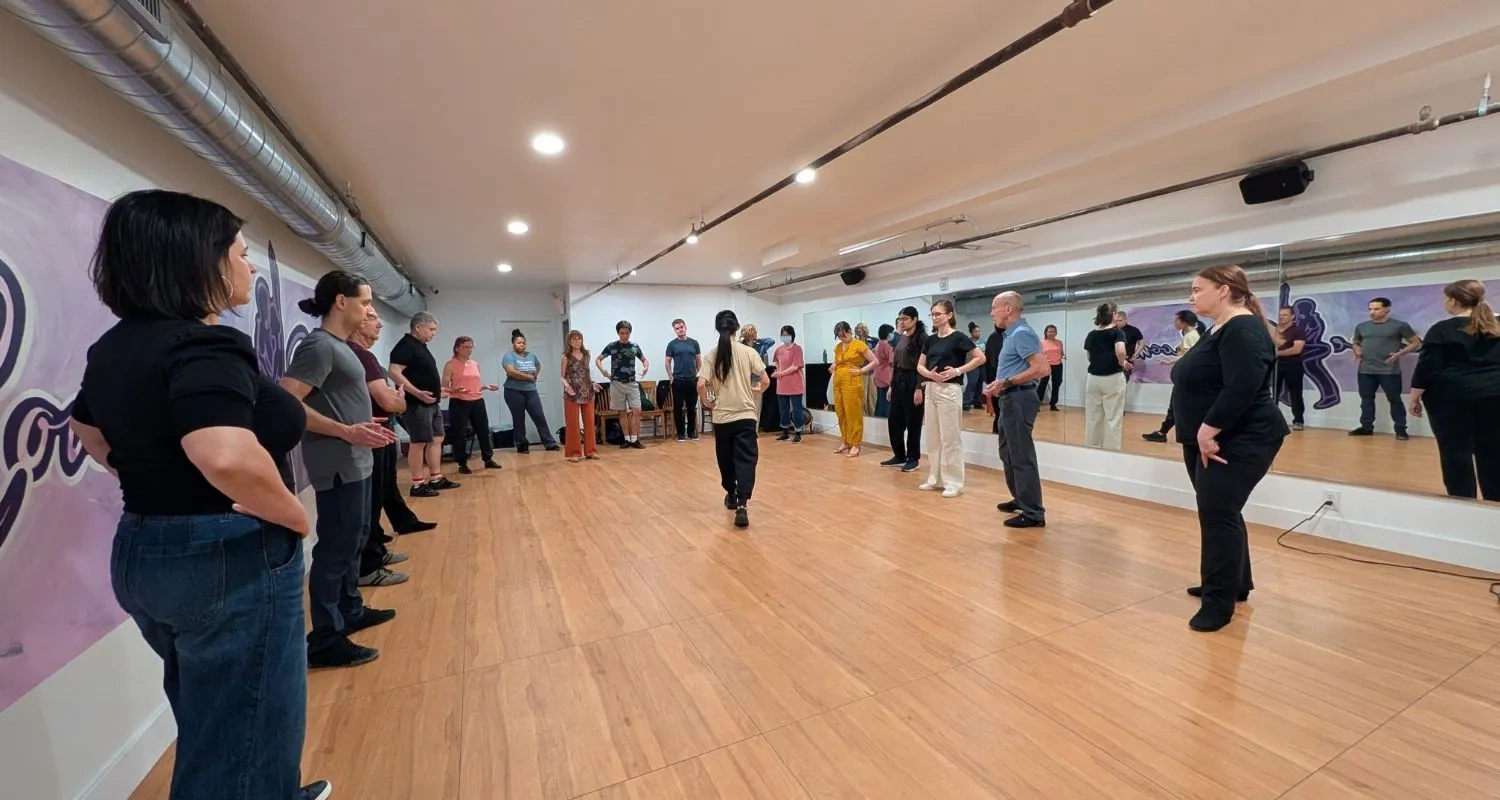
We offer dance classes for adults in Philadelphia, PA at the Concierge Ballroom studio, located on the border of Old City and Center City.
What you should know is that our entire offering is intended for adult students. There are no children’s groups, and therefore no attention split between age groups, while the pace of the class and the order of the material are set for people who learn as adults.
Our advice is to start with private lessons, and then add group classes. This way, you’ll learn the basic steps and correct posture with an instructor first, so you can walk into your first group class with confidence.
Ready to Take Your First Dance Class in Philadelphia, PA?
All you need to start dancing is willingness and at least one session a week. Here at our dance studio in Philadelphia, new students take our beginner introductory offer, which consists of two 30-minute private lessons and entry to one social.
Dance classes for adults usually start this way: in the first session you’ll go through the basic steps, in the second through leading/following, and at the social you’ll have the chance to dance with someone who isn’t your instructor.
All in all, all that’s left is to make the decision, set aside a little time for a new activity, and book your first class.
Frequently Asked Questions
How Often Should a Beginner Take Classes?
Once a week is enough to start. Twice a week gives faster progress, but only if you repeat the steps at home for at least a few minutes between sessions.
What Should I Wear to My First Dance Class?
Wear something you can move easily in and feel natural in. Your clothes should allow a wider step and raising your arms, which is why tight skirts and stiff jeans aren’t exactly ideal. Bring a change of shirt too, because even a beginner class can get quite physically demanding.
Do I Have to Be in Shape to Take Dance Classes as an Adult?
No. You don’t need any physical preparation, because everything is built up gradually. The first classes mostly come down to walking in rhythm and shifting your weight, and fitness comes along the way, through regular attendance.
How Long Before I Can Dance at Social Events?
Most beginners are ready for their first social event after a few weeks of regular classes. The exact timing depends on the dance style and how much you practice between lessons. You don’t need to know much to join in, though. One confident basic step and one turn are enough to get out on the floor and enjoy the evening.