
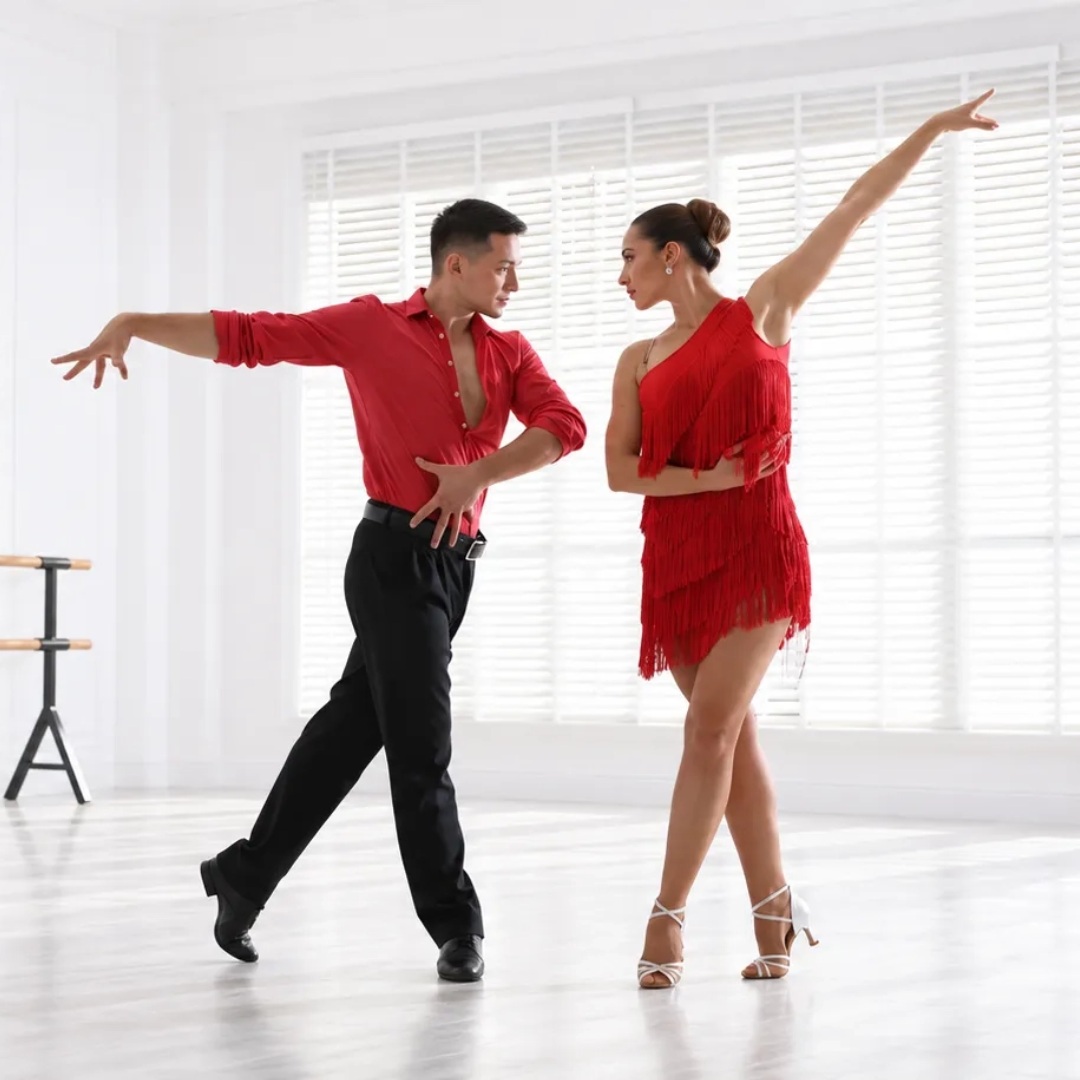
Rumba dance is a slow, romantic Latin partner style in 4/4 time, recognizable by its hip motion and its slow, quick, quick rhythm. The tempo of this dance is much slower than in Salsa or Jive, which is why adult beginners easily have time to hear the music and transfer their weight through each movement.
The basic step is the box step, a simple pattern you’ll learn in your first lesson and can dance to music right away.
In this guide, you’ll find out where this dance comes from, what the basic step looks like, how long it takes to learn, what music it’s danced to, and where you can learn it in Philadelphia, PA. We focus on American Rhythm Rumba, the version most studios teach to social dancers and couples preparing for their wedding.
Key Takeaways:
| Question | Short answer |
|---|---|
| What is Rumba dance? | A slow Latin partner dance in 4/4 time, with an emphasis on hip motion and the connection between partners |
| What’s the rhythm? | Slow, quick, quick across four beats |
| What’s the basic step? | The box step, the first pattern every beginner learns |
| How hard is it? | One of the more accessible Latin dances for adult beginners |
| Do you need a partner? | No, you can come on your own and dance with an instructor |
| Where in Philadelphia, PA? | Concierge Ballroom, through private dance lessons and group classes |
What Kind of Dance Is the Rumba?
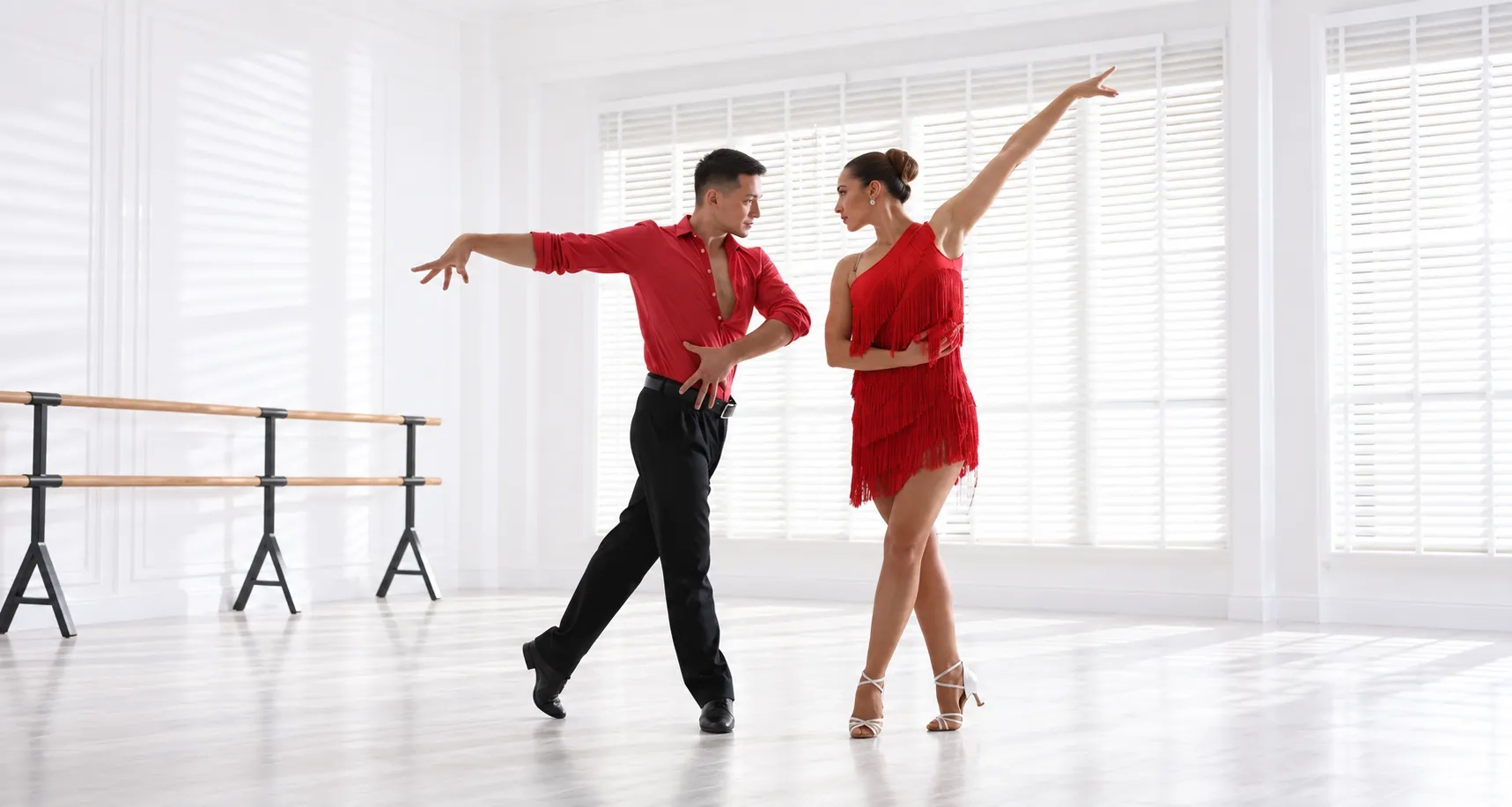
The Rumba is a ballroom style danced with a partner, and in the US it’s taught through two programs, American Rhythm and International Latin. Unlike Waltz or Foxtrot, you won’t move around the floor much while you dance, you’ll stay more or less in place, so a few square feet of space is all you need.
That’s why this dance is so common at weddings and social events, where the floor is small and there are often a lot of people on it. What Rumba dancing depends on isn’t “speed”, but how cleanly you transfer your weight and how well you lead or follow your partner.
| Parameter | Rumba |
|---|---|
| Origin | Cuba |
| Time signature | 4/4 |
| Tempo | Around 100 BPM in the International Latin version and around 124 BPM in the American Rhythm version, according to the official tempi in the NDCA rulebook |
| Step rhythm | Slow, quick, quick |
| Character | Romantic, slow, expressive |
| Difficulty for beginners | Low to medium |
Where Does Rumba Dance Come From?
Rumba dance comes from Cuba, from the working-class neighborhoods of Havana and Matanzas in the second half of the 19th century, where it grew out of African traditions brought by enslaved people, along with elements of Spanish and Antillean music. In 2016, UNESCO added Cuban Rumba to the Representative List of the Intangible Cultural Heritage of Humanity, as a combination of music, dance and the customs that go with them.
The version taught in dance studios today reached the US in the 1930s, when Cuban orchestras and the hit “The Peanut Vendor” set off a real wave of interest. American instructors took that rhythm and adapted it to the ballroom floor.
Cuban vs Ballroom Rumba: What’s the Difference?
They share a name, but they’re different. The Cuban version is essentially a folk genre with three basic forms: yambú, guaguancó and columbia. These forms are performed with percussion, singing and a response from the audience. In guaguancó, for example, the dancers don’t hold each other but outwit one another through a game of coming closer and pulling away.
Ballroom Rumba, on the other hand, is a standardized version derived from Cuban son and bolero-son, with agreed figures that a couple dances “in hold”. At Concierge Ballroom, you’ll learn exactly that version, the one danced with a partner and the one you can often dance at a wedding or at a social gathering.
Is Rumba a Sensual Dance?
It is. Rumba dance is considered one of the most romantic in the Latin family, but that sensuality doesn’t come from choreography, it comes from the hip motion and the connection with your partner. The hips aren’t moved on purpose, they simply follow the transfer of weight from one foot to the other and the straightening of the knee, and in dance terminology, that movement is called Cuban motion.
Still, there’s nothing in your first lesson that should make you uncomfortable. You work on the basic step, the hold and the timing, while Cuban motion comes later, once your feet start moving on their own and once they “know what they’re doing”. Students who come to us worried about Rumba being “too passionate” usually see in that first lesson that this style is above all an exercise in patience and balance, and everything else comes after that.
What Are the Basic Steps of Rumba?
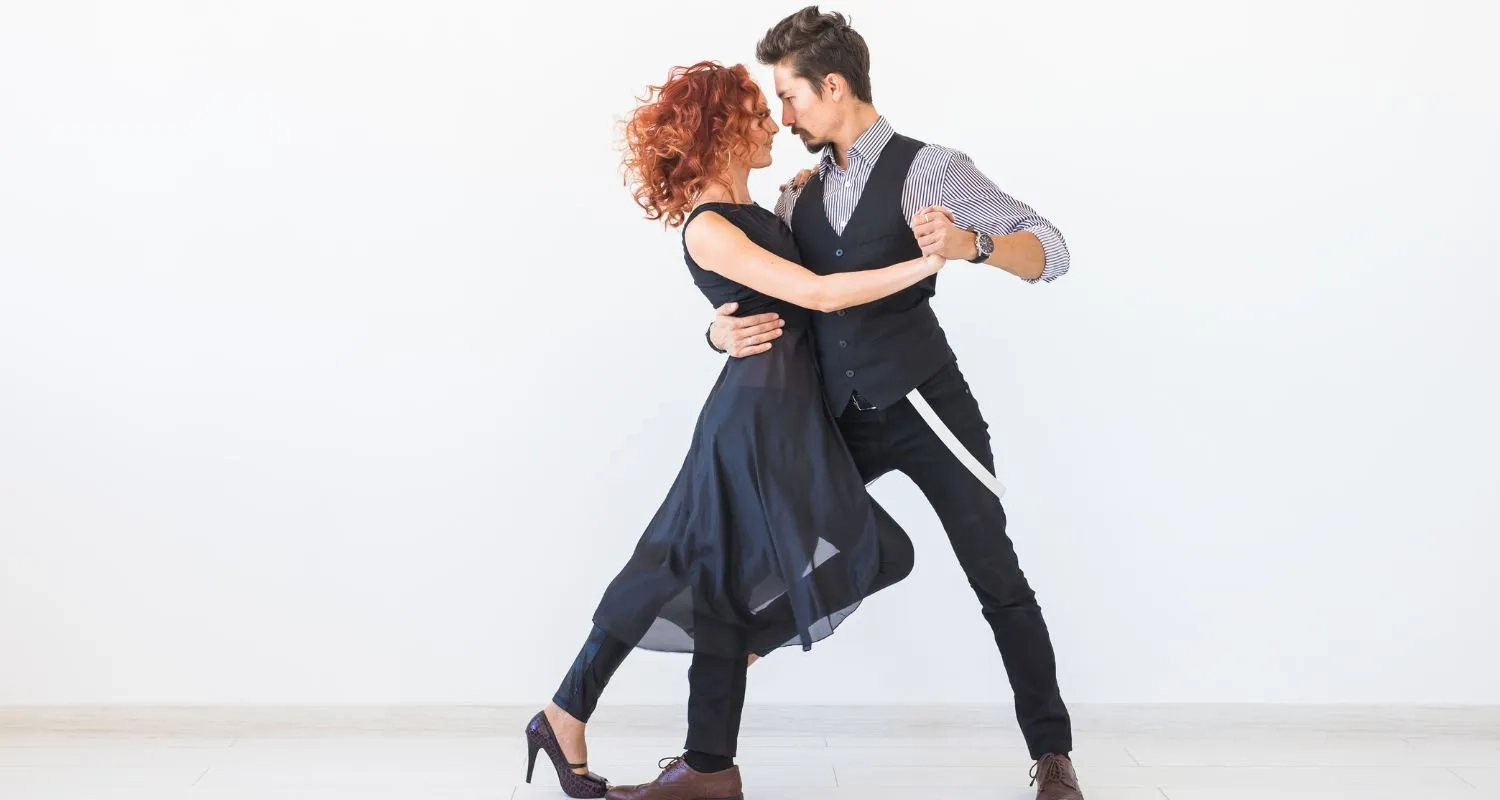
The basic step is the box step, a square danced in a slow, quick, quick rhythm across four beats. The lead starts forward with the left foot, and the follow mirrors it backward with the right.
- Slow (beats 1 and 2): a step forward with the left foot, with a full transfer of weight.
- Quick (beat 3): a step to the side with the right foot.
- Quick (beat 4): the left foot closes to the right.
- The second half of the square: the same pattern backward, a step back with the right, then to the side with the left, then closing the right.
Once you put that in motion, your feet trace a square and you end up exactly where you started. The step begins again from there, which is the reason the box step is taught first.
Common Beginner Mistakes in the Box Step
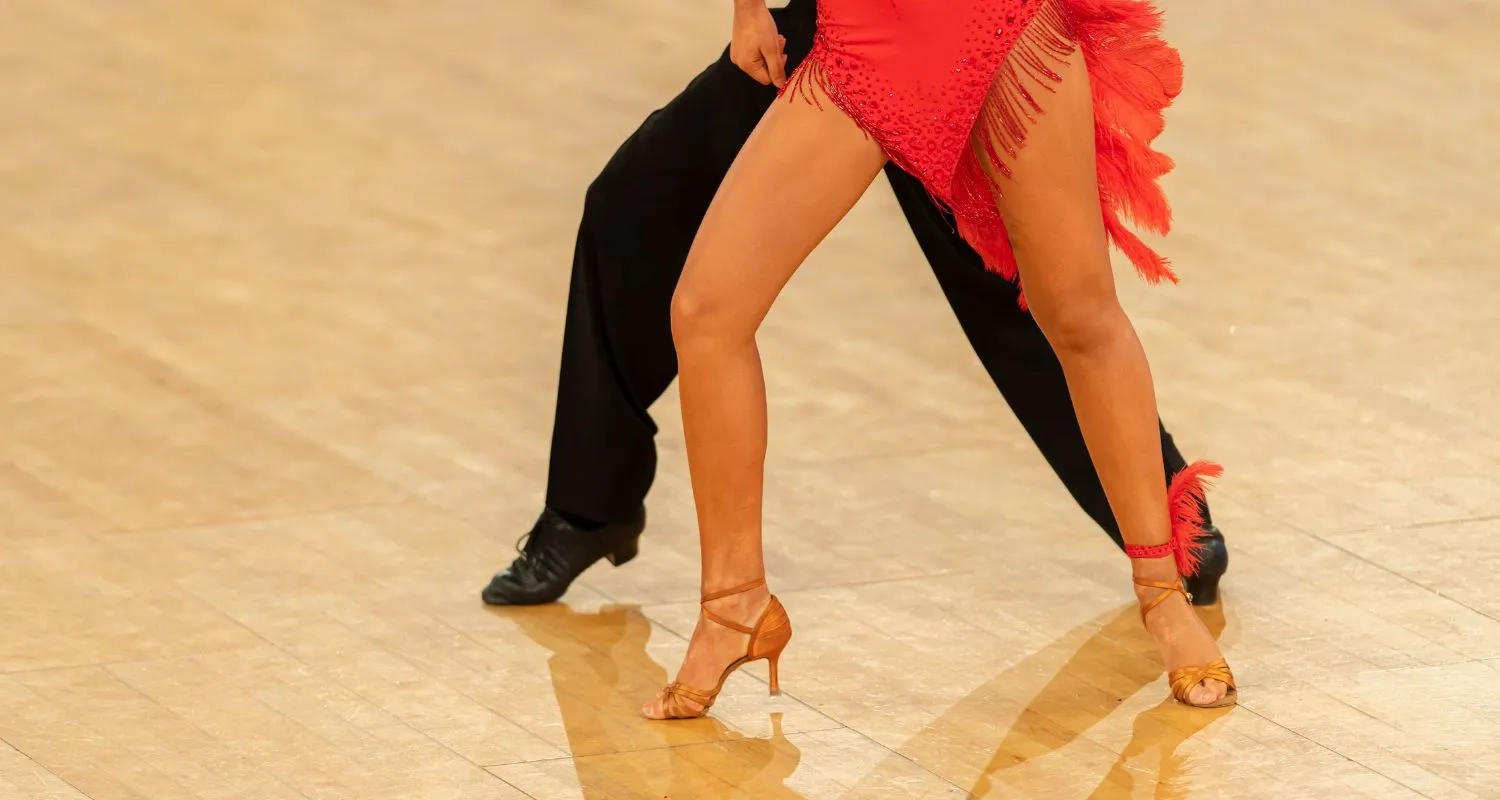
The first is looking down at your feet, which shifts your weight forward and ruins your balance, so we recommend focusing on your partner’s collarbone and letting your feet do the work on their own.
The second is moving your hips on purpose, even though their job is only to follow the straightening of the knee during the transfer of weight, so we recommend practicing the shift of weight from foot to foot in place. At first, without steps, until you feel the hip move on its own.
The third is rushing the “slow” step, since most beginners do it in one beat instead of two, so count out loud until your body remembers that this step is twice as long.
What Music Do You Dance Rumba To?
It’s danced to music that’s in 4/4 time with a slow and steady tempo, and in which the beats are clearly audible. The closest fits are Cuban son and bolero, but the slow, quick, quick pattern also works nicely with slow pop ballads, R&B and soul tracks, and even with some popular film music.
For practice, pick recordings with a solid rhythm section, because songs that slow down and speed up will force you to guess the beat. Once you gather five or six such tracks, you’ll have enough for working on your own between lessons and you’ll be able to build a ballroom dance playlist to practice at home.
How Hard Is It to Learn Rumba Dancing?
Rumba is one of the more accessible ways into the Latin program, first of all because the slow tempo lets you think before every step. There are no jumps, kicks, or quick changes of direction like in Jive or Samba.
With regular lessons, most beginners learn the box step and a few basic figures within their first few lessons. The harder part comes later, with timing and Cuban motion, and that’s where the difference shows between those who practice between lessons and those who don’t. You can read about what a studio should give you at that stage in our article on moving from beginner to intermediate dance levels.
How Is Rumba Dance Different From Bolero and Cha-Cha?
All three dances share 4/4 time and Cuban motion, which is why they seem more alike to beginners than they actually are. The biggest difference is in the tempo and in how many steps fit into one measure.
Rumba and Cha-Cha are danced to almost the same speed of music, except that Cha-Cha feels much faster because it has the chasse, that is, three steps across two beats.
Bolero, on the other hand, is slower than both and it’s the only one that calls for wider movement around the floor, with rise and fall like the ones in Waltz.
| Dance | Tempo | Step rhythm | Character |
|---|---|---|---|
| American Rumba | Around 124 BPM | Slow, quick, quick | Romantic, danced in place |
| Bolero | Around 92 BPM | Slow, quick, quick with rise and fall | The slowest of the three, wide and traveling |
| Cha-Cha | Around 120 BPM | Step, step, cha-cha-cha | Lively and playful, sharper steps |
What you should know is that Rumba, Bolero and Cha-Cha belong to the ballroom program, while Salsa and Bachata are social Latin dances with their own rhythm and styling, so they’re usually taught as separate programs. Since those last two dances are very common at all kinds of celebrations, it’s also worth reading why Salsa and Bachata always lift the mood at any event.
Do You Need a Partner to Learn Rumba Dance?
No, you don’t need a partner. Couples and individuals come to private Rumba dance lessons, and anyone who comes alone dances with an instructor, which means the whole lesson runs at their level with expert guidance.
Group dance classes for adults work a little differently. Partners rotate during the lesson, which is the fastest way to learn to lead or follow someone you don’t know, and that’s what you’ll often need. Still, if you’d rather start on your own and without an audience, book private lessons and progress at your own pace.
Where Can You Learn Rumba Dance in Philadelphia, PA?
You can learn how to dance Rumba in Philadelphia, PA at Concierge Ballroom. We’re located at 30 South 7th Street, in Old City, close to Independence Mall. It’s part of our learning program, along with Cha-Cha, Bolero, Mambo and Salsa, and the studio itself has been open since 2017.
You can join private dance lessons, which means one-on-one work with an instructor. We also offer dance classes for adults in a group setting, and these follow a published schedule.
Take Your First Rumba Dance Lesson in Philadelphia, PA
Not sure yet if Rumba is for you? Our new student offer lets you try it first. It includes two private lessons and one social dance party. That’s enough time to learn the basic step and see what it’s like to work with an instructor.
Getting started is simple. Contact us, pick a time that works for you, and you could be dancing Rumba as soon as this week. We can’t wait to see you on the floor!
FAQ
What shoes and clothes should you bring to your first lesson?
Bring shoes with a smooth sole, because turns and weight transfers are very frequent, and sneakers with a rubber sole stick to the floor and can cause you trouble. Your clothes should be comfortable and let you bend your knees properly.
Do you need previous dance experience?
No, you don’t. At our dance studio in Philadelphia, PA, every lesson starts from the very beginning. First comes weight transfer, which means shifting your weight smoothly from one foot to the other. Next is the box step, the basic pattern that traces a square on the floor.
How often should you practice between lessons?
Aim for 10 to 15 minutes, three or four times a week. Short, regular sessions work better than one long practice the night before your lesson. Timing is something your body learns through repetition, and every short session helps the rhythm stick.
Can you learn Rumba later in life?
Yes. It’s one of the most popular choices for adults who start dancing later in life. There are no jumps, no lifts, and no sudden changes of direction. The slow tempo gives you time to think about each step, so you never feel rushed.
That makes it much gentler on the knees and back than fast, bouncy styles like Jive or Samba.