
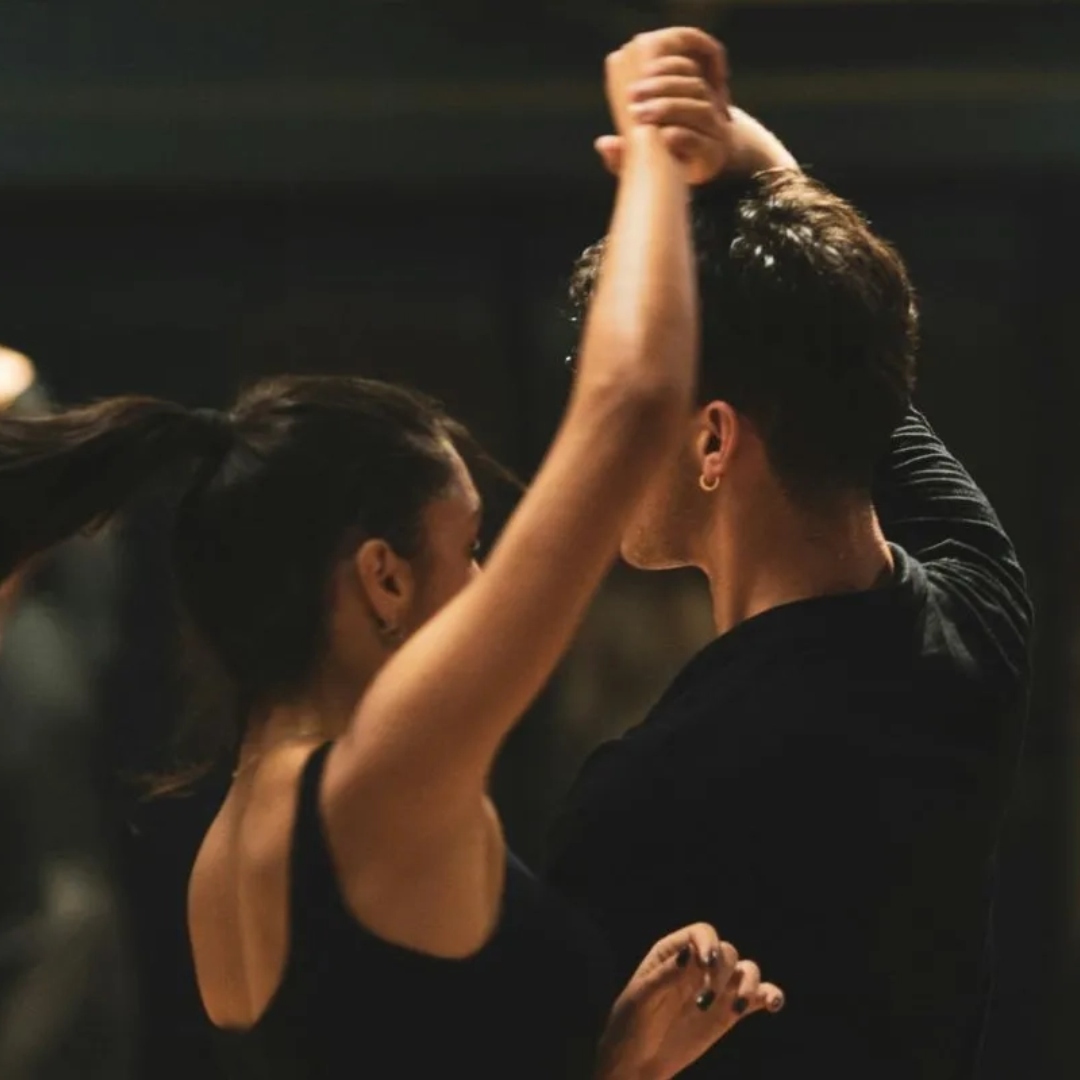
Social dance is a category of partner styles, like Salsa, Bachata, and Swing. These are danced for fun rather than for competition or performance.
At a social dance event, it’s common to switch partners after a song or two. There’s no routine to memorize. One person leads, the other follows, and the dance is improvised to whatever song is playing.
Leading, following, and a feel for the rhythm are skills you can learn, and a few private lessons at Concierge Ballroom will give you the foundation to enjoy any dance floor.
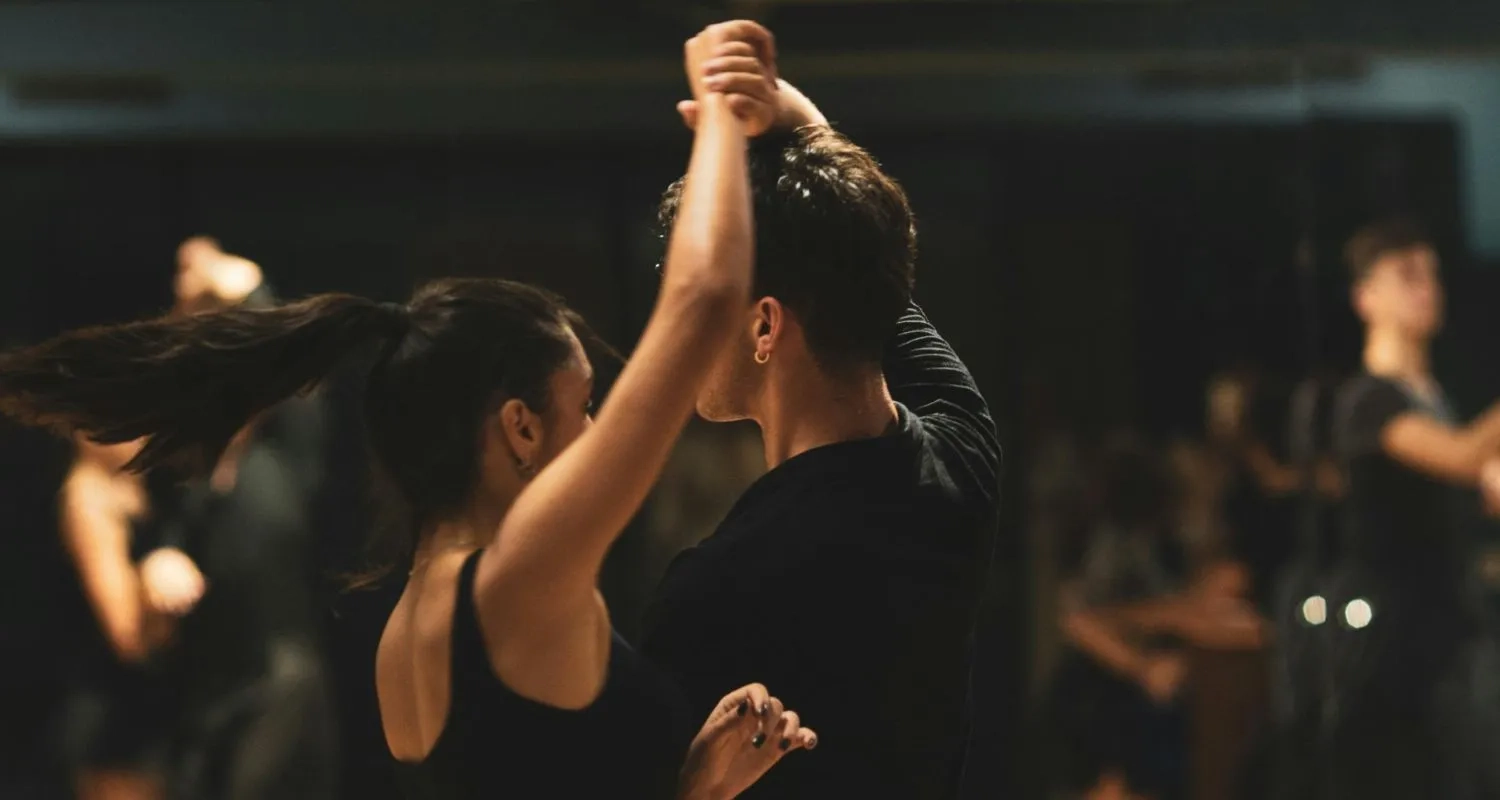
What Makes a Dance a Social Dance?
It’s improvised, partners change, and nobody is judging.
Here’s what each of those means in practice:
- No choreography. The leader picks the movements while the song plays, and the follower reads them through hand contact and body posture. That’s why the same song often ends up looking different every time.
- The partner changes. It’s common to dance a song or two with someone, thank them, and ask someone else.
- Nobody is judging. People may watch from the side, but no one is scoring your steps. You dance for yourself and your partner, not for an audience.
The same dances also appear in performances and competitions, but with very different rules:
| Social | Performance | Competition | |
|---|---|---|---|
| Choreography | No | Yes | Yes |
| Audience | No | Yes | Yes, plus judges |
| Partner | Changes | Fixed | Fixed |
| Goal | Fun and socializing | Performing | Being scored |
What Is the Most Popular Social Dance?
The most widespread social dances on open floors are Salsa, Bachata and swing styles, above all West Coast Swing. The reason for that is that these have a basic step that can be learned quickly and they handle a wide range of music.
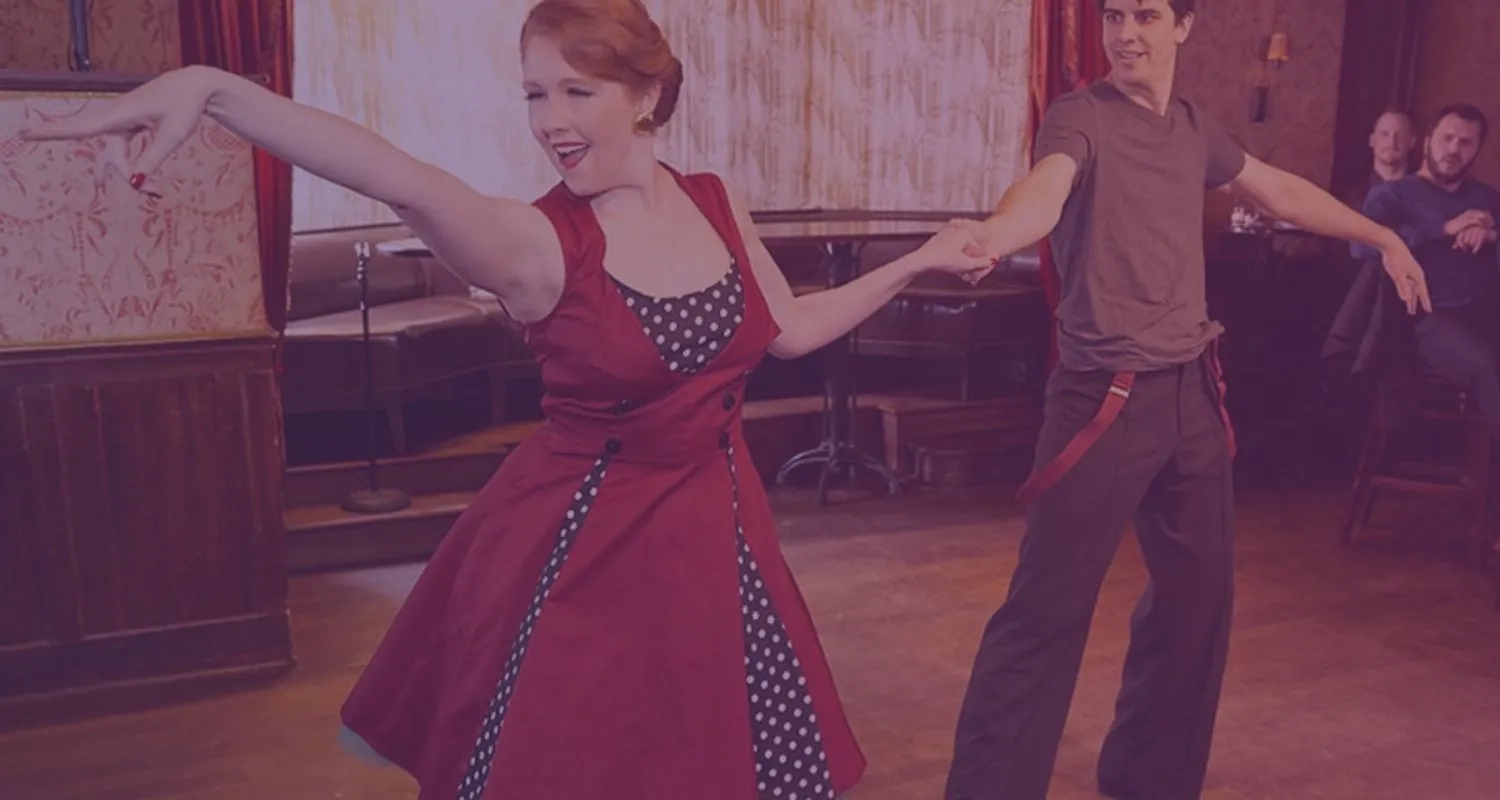
In Philadelphia, PA, some nights are focused on Latin, while others mix ballroom and swing through the same playlist. If you’re going to your first social dance event, Salsa and West Coast Swing are the safest choice, because you’ll hear them almost everywhere.
10 Popular Social Dances
- Waltz. It’s slow and counted in three, and partners rise and fall slightly through the step, which is why it looks like they’re “gliding across the room.”
- Foxtrot. It goes to big band music and moves in long, straight lines. If you like Waltz, Foxtrot is the logical next step because they share a similar way of moving around the floor.
- Rumba. It’s one of the slowest Latin styles, which makes it an ideal choice for beginners because it gives them plenty of room to settle into the rhythm. If that tempo suits you, see how Rumba works and why beginners pick it up quickly.
- Cha-Cha. A similar Latin foundation to Rumba, only much faster, with three short steps that line up one after another.
- Salsa. One of the fastest Latin styles, full of quick turns and changes of place.
- Bachata. It moves to the side, with a hip lift on the fourth step. The basics can be learned relatively quickly, which is the reason beginners usually start with this one.
- Hustle. It’s danced to a disco beat and anything with a similar pulse, from the seventies to today’s pop, with fast turns in the pair.
- Lindy Hop. The original swing dance from the late 1920s, with energetic swingouts and wide turns. It takes a bit more stamina than the others.
- East Coast Swing. A fairly lively style, it stays in a small space and it’s the easiest entry into the swing family.
- West Coast Swing. It’s danced along a line instead of in a circle; it’s slower and it leaves the most room for improvisation.
It’s worth pointing out that the Swing family is one of the widest and it’s worth looking at separately, which is why we recommend that you explore the swing styles.
What Happens at a Social Dance Night at Concierge Ballroom
A social dance night is an evening of open dancing where anyone can ask anyone to dance. Some socials begin with a group lesson or workshop, while others go straight to open dancing.
The music usually mixes several styles, such as ballroom, Latin, and swing. You don’t need to know them all. When a song comes on that matches a dance you’ve learned, you ask someone to dance, and when you don’t recognize the style, you can sit it out or watch.
There’s no fixed order of partners. You choose when to dance and with whom, and it’s common to switch partners after a song or two. Some socials are themed, with costumes or a short student performance, but most of the evening is simply people dancing.

Social Dance Etiquette for Your First Night
Etiquette at social nights is simple and more or less similar almost everywhere, which is why it’s worth learning. It covers the following:
- Asking for a dance. You walk up, make eye contact and ask. The invitation is extended to anyone, regardless of skill, and it’s most often accepted.
- Turning someone down. A short “thanks, not this song” or “this song isn’t for me” is perfectly enough. No explanation is expected, and a refusal isn’t taken personally. If you turn down an invitation, it’s proper to sit that song out.
- Where you stand. When you’re not dancing, step off the floor so you don’t block couples moving around it.
Do You Need a Partner for Social Dancing?
For social dancing, you don’t need a partner. Couples, individuals and groups of friends all come to our nights, and the partner changes from song to song anyway, so coming solo is completely normal. If you’re on your own, asking someone to dance is simple. Walk up, offer your hand, and ask. Most people are happy to say yes, especially to newcomers.
If you’d like to feel more confident before your first social event, a few private dance lessons will get you comfortable with the basics.
What Are the Most Common Beginner Mistakes?
Three things come up most often with beginners, but all of them are relatively easy to solve:
- Waiting to “be ready.” There’s always one more step that hasn’t been learned and one more lesson that’s needed, which is why the first night out gets put off for months. Go to your first event early in your learning and dance what you know.
- Looking at your feet. Looking down changes your posture and makes leading and following harder, because your partner gets the information through the hands and torso. Keep in mind that a step is much easier to check by feel than by eye.
- Trying to pull off more complex steps. Beginners often try moves they’ve only seen on video, lose the rhythm, and end up stopping mid-song. A clean basic step looks better than a messy turn, and it’s more fun for your partner.
If you’re curious about what comes after the basics, we suggest you read our guide on how dancers move from beginner to intermediate levels.
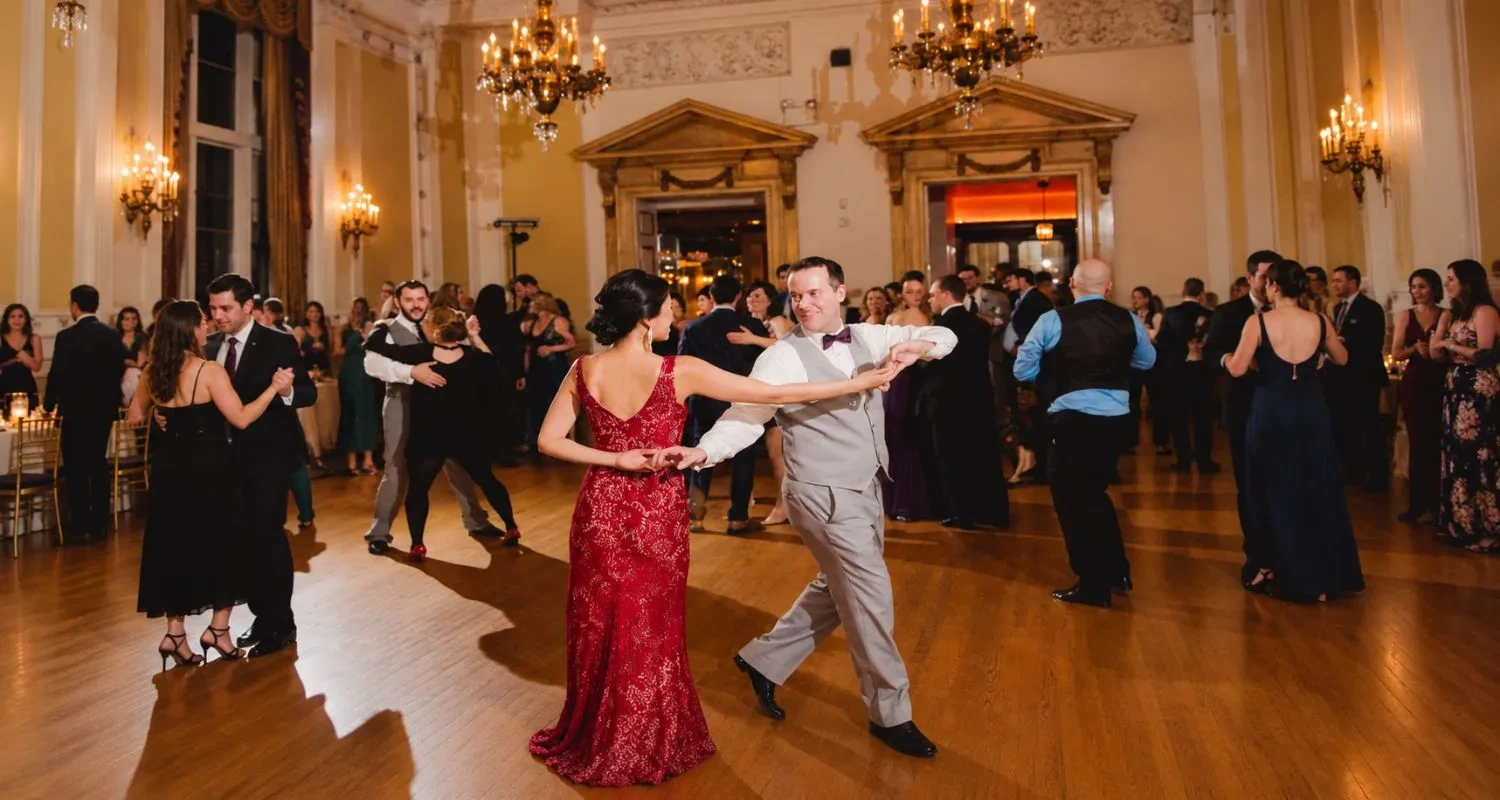
Why Is Social Dancing Good for You?
Social dancing brings together three things that rarely go together, and those are physical activity, learning and social contact. On top of that, you should know that dancing also asks for “your head.” You follow the rhythm, read your partner and change direction on the move, and you’ll see that the load is both physical and mental at the same time.
A study published in the New England Journal of Medicine followed 469 people over the age of 75 and found that dancing, along with reading and playing an instrument, was associated with a reduced risk of dementia, which makes it interesting for older students as well. It’s also worth pointing out that of all the physical activities examined, dancing was the only one where that connection showed up.
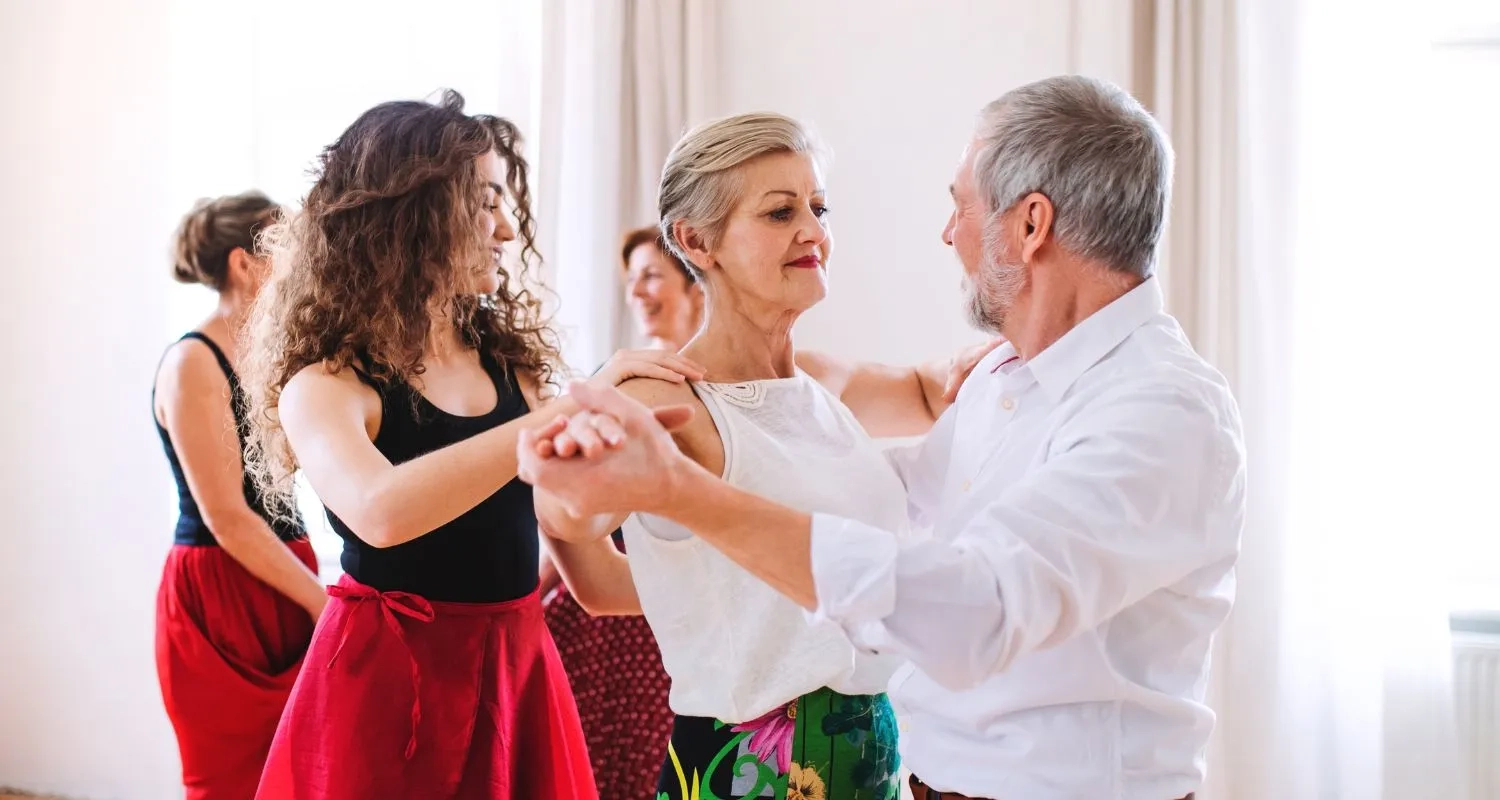
In addition, socializing and meeting new people is often the strongest reason. Rotating partners means you’re constantly meeting new people and exchanging new experiences, which these days isn’t something that happens often.
Where Can You Go Social Dancing in Philadelphia, PA?
Social dance nights in Philadelphia, PA are run by studios and independent organizers, and there are quite a few of them in the Center City and Old City area. Our Concierge Ballroom is one of them. We host regular events with ballroom, Latin, and swing music, and they’re open to everyone, from first-timers to experienced dancers.
If you’d like some practice before your first social dance event, our group dance classes are a good place to start. You’ll learn the basics alongside other beginners and dance with different partners, just like you will at the event. You’ll probably see a few familiar faces there too, which makes that first night much easier.
How to Prepare Before You Go
There are a few things to pay attention to before you come to your first social dance event:
- Footwear. A shoe with a smooth sole is the one thing that really makes a difference. A rubber sole sticks to the floor and makes turns significantly harder. Of course, you don’t have to show up in professional shoes on your very first night, but it’d be good to pick suitable footwear.
- Clothing. Whatever you move easily in and feel most comfortable in.
- What to bring. A bottle for water, a spare shirt and a towel are practically standard. We’re saying this because a couple of hours of dancing is a serious physical activity.
Learn Social Dances in Philadelphia, PA
The easiest way to start is our New Student Offer: two private lessons and entry to one social dance event. The lessons give you a basic step and a feel for the rhythm, so you walk in with something to dance instead of guessing.
Book your first dance lesson today, and we’ll see you on the floor!