
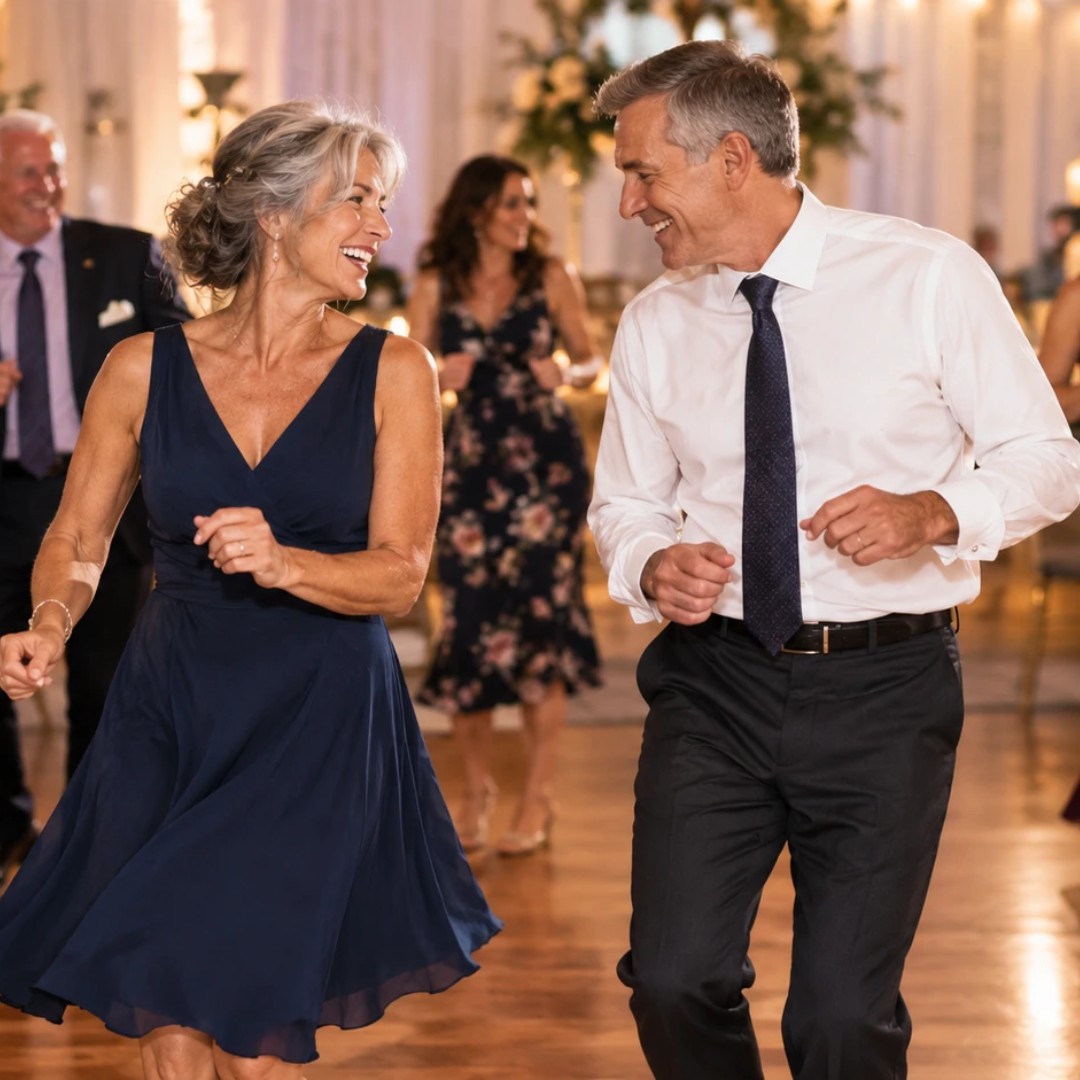
Learning how to dance at a wedding is easier than you think, because you don’t need real moves. A relaxed step from side to side for party songs and a gentle sway for slow songs are enough to look like you belong on the floor.
So how do you dance at a wedding without feeling awkward? Most of the awkwardness happens because guests don’t know what to do at each moment of the night. This guide follows the evening in order, from getting dressed to the last song.
Before the Wedding: Your Outfit and One Move
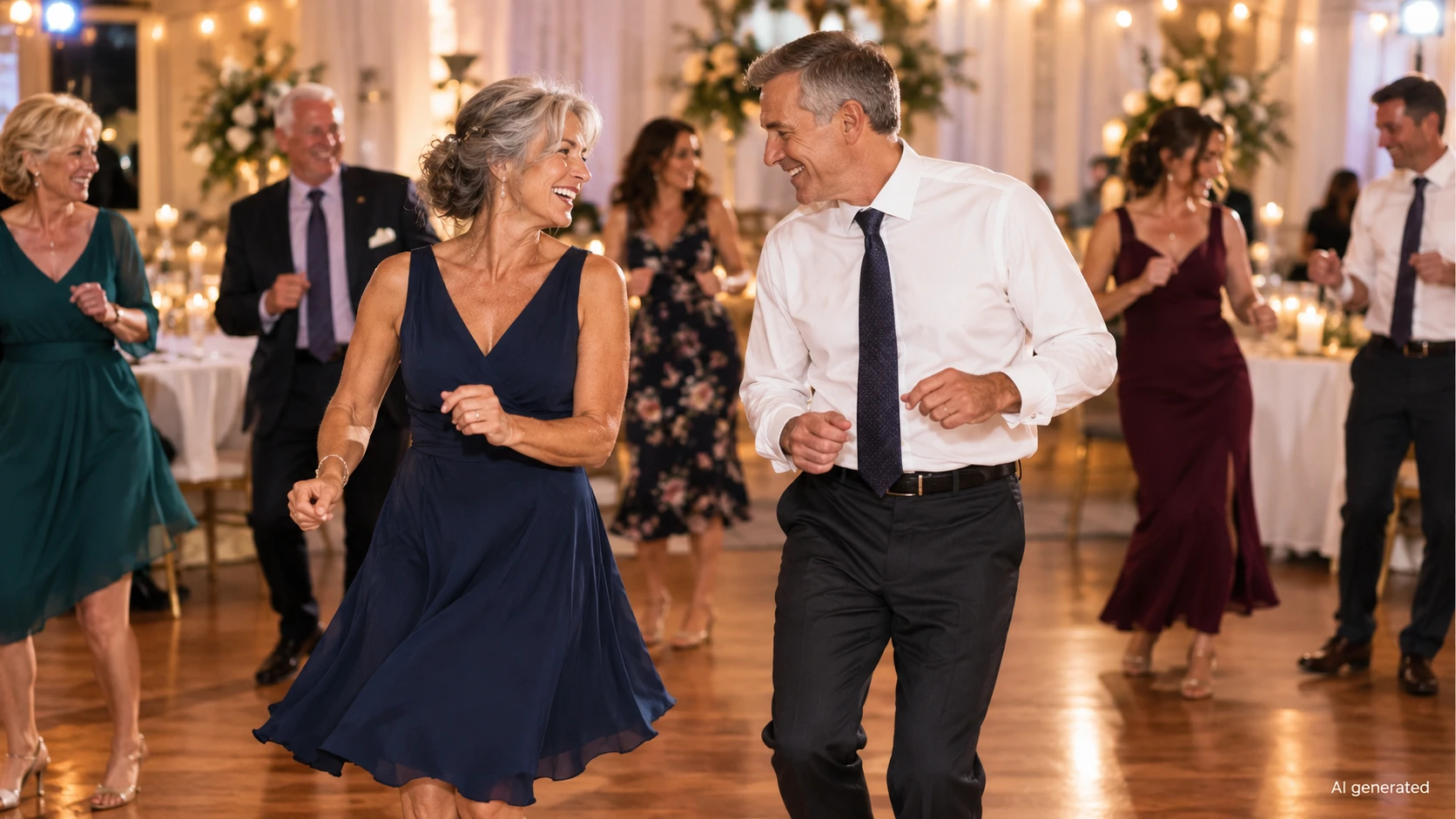
Start with your shoes, because they decide how long you’ll last on the floor. Block heels, flats or smooth-soled dress shoes let you turn easily. Stilettos and grippy rubber sneakers make every step harder. If you’re wondering what to wear to a wedding dance, the simplest test is to try a few steps in your outfit at home. If it pinches, drags or slips, change it before the day.
Then practice the step-touch at home to two or three songs you expect to hear. You’ll learn how below.
How to Dance at a Wedding As a Guest
Step 1: Find the Beat
Looking natural isn’t about knowing moves. It’s about moving in time with the music. If you get that right, even the simplest step looks like real dancing.
Listen for the drum, the deep “boom” that repeats steadily through most party songs. While you’re still sitting at your table, tap your foot or nod your head along with it. If you can tap along, you can dance, because your feet will step exactly where your tap goes.
Step 2: Start With the Step-Touch
Once you’re on the floor, keep tapping the beat, just standing up. Then turn that tap into the step-touch: step to the right on one beat, bring your left foot next to it on the next, and repeat to the left. Keep your knees slightly bent, so the movement looks relaxed instead of stiff.
If you lose the beat, don’t stop. Bounce gently on the spot until you hear the drum again, then pick the step back up. Nobody notices, because you never stopped moving.
Step 3: Add Simple Moves
When the step-touch feels comfortable, add variety with your arms, not your feet. Let your arms swing as you step, clap on the beat, or point to the ceiling when the chorus hits. A small change like that makes the same simple step look like a whole new move.
If you’re still unsure how to do all this and are in Philadelphia, a private dance lesson at our studio can walk you through it step by step. We’ll practice finding the beat, the step-touch and a few easy arm moves to the kind of music you’ll hear at the wedding.
How to Slow Dance at a Wedding
A slow dance at a wedding needs just three things: a comfortable hold, a simple sway and one person guiding the direction.
Learning how to slow dance takes a little practice, and these details make it feel easy rather than stiff:
- Choose your hold.
- Casual hold: the leader rests both hands on the follower’s waist, and the follower rests both hands on the leader’s shoulders. It’s the easiest for beginners.
Closed hold: the leader’s right hand sits on the follower’s upper back, the follower’s left hand rests on the leader’s shoulder, and your other hands join out to the side.
Open hold: you face each other with a little space between you and hold one or both hands at waist height, which works well with a friend or someone you’ve just met. - Step side to side, not forward. Step to the side with one foot, then bring the other foot next to it, slowly and on the beat. Then repeat in the other direction. Stepping sideways keeps your feet apart from your partner’s, which is the simplest way to avoid stepping on toes.
- The leader moves first, and the follower moves with them. If you’re leading, move your body first. Your partner will feel it through the hand on their back or waist and move with you. Never push or pull with your arms. Just keep your hands in light, steady contact and let your body do the guiding. If you’re following, keep your arms relaxed but not floppy. Following means reacting, not guessing.
- If you step on a toe, smile and keep going. It happens to everyone, even experienced dancers. A quick “sorry” is enough, then pick up the sway again. Stopping completely is more awkward than the misstep.
- Listen for songs that count in threes. Some slow songs have a “1, 2, 3” rhythm instead of “1, 2, 3, 4”. You’ll hear a strong beat followed by two lighter ones. That’s waltz time. To dance to it, take a slightly bigger step to the side on “1,” bring your other foot next to it on “2,” and shift your weight onto it on “3.” Then repeat in the other direction.
Wedding Dance Etiquette: What Every Guest Should Know
Most wedding dance etiquette comes down to following the DJ or bandleader’s cues. They run the evening, so when they invite everyone up, that’s your signal. Until then, the floor is reserved for the couple’s special moments: the first dance, the parent dances and any wedding party dances.
Special Dances You Might Be Invited To
Even after the floor opens, the DJ may call guests up for a traditional dance. Knowing what each one means makes it easy to join in:
- Anniversary dance: all married couples are invited onto the floor. The DJ then asks couples to sit down in stages, starting with the newest marriages, until only the longest-married couple is left dancing.
- Money dance: at some weddings, guests can give the couple a little money in exchange for a short dance with the bride or groom. The way it’s done varies by family and culture, so just follow what other guests are doing. It’s always optional.
- Bouquet and garter toss: single guests may be invited forward to catch the bouquet or garter. At some weddings, the two who catch them share a short dance.
Asking Someone to Dance, and Saying No
To ask someone to dance, make eye contact, smile, offer an open hand, and ask whether they want to dance with you. Never grab a wrist or pull someone onto the floor, and give them a moment to finish their drink or conversation. If they say no, accept it gracefully. If you’re nervous, it’s fine to say you’re still learning.
If you’d rather not dance, a simple “No, thank you” is enough. You don’t owe a reason. One rule matters, though: if you turn someone down, don’t dance that same song with someone else. At the end of a song, thank your partner. It’s a small habit that makes dancing at a wedding feel friendly, even with someone you’ve just met.
Sharing the Floor
A wedding dance floor gets crowded, so take smaller steps when it’s busy. If you bump into someone, a quick “sorry” is enough, so don’t stop the dance over it. When you want to chat or fix a shoe, step off the floor instead of standing still in the middle of it.
Getting Married? Take Wedding Dance Lessons in Philadelphia, PA
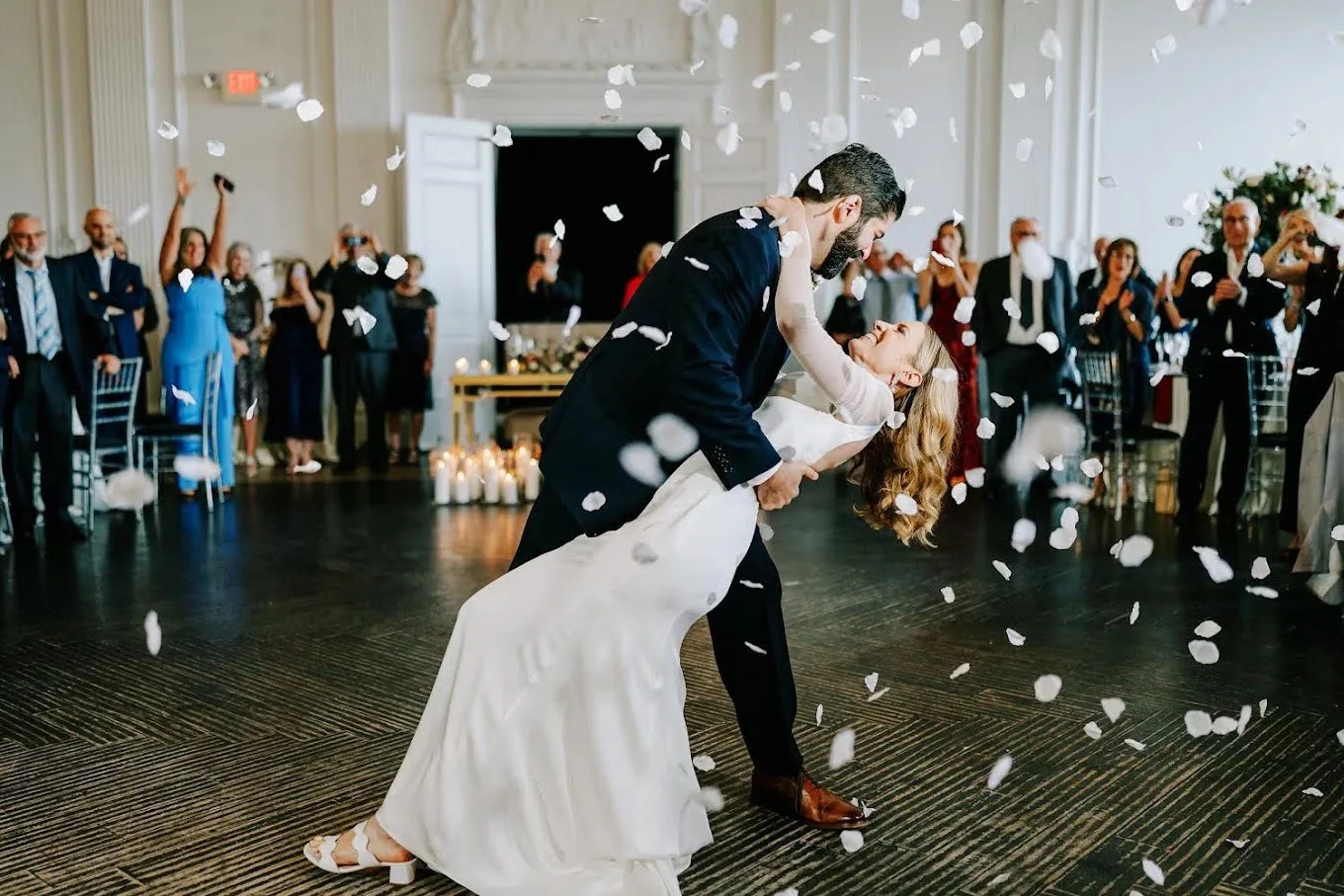
If you’re the couple, a sway and a step-touch won’t be enough for your first dance. Everyone watches you for the whole song, so it helps to practice a short routine you both feel confident in.
Our wedding dance lessons in Philadelphia, PA, start with a consultation, where we talk through your song and the feel you want. From there, we choreograph a first dance in the style that suits you, whether that’s a classic waltz, a playful swing or something in between.
Start 3 to 6 Months Before the Wedding
Plan to start your lessons at least 3 to 6 months before the big day. That gives you:
- Time for the routine to sink in. Steps practiced over several weeks become muscle memory, so on the day you can enjoy the moment instead of counting in your head. Cramming in the final weeks rarely sticks under pressure.
- Room in a busy schedule. The last two months before a wedding fill up with fittings, vendors and family plans. Starting early means your lessons don’t compete with everything else.
- Time to practice in your wedding outfit. A dress with a train or new shoes changes how you move. Leave a few lessons near the end to rehearse in them.
Dance With Confidence at the Next Wedding You Attend
Reading about how to dance at a wedding is a good start, but nothing builds confidence like trying it once with a teacher beside you. If you’re heading to a friend’s or family member’s wedding and still feel nervous about dancing, a private lesson is the quickest way to change that.
At Concierge Ballroom, our dance studio in Philadelphia helps guests, parents of the couple and bridal parties get ready for the big day. In a private lesson, it’s just you and your teacher, so nobody is watching you learn. We’ll practice everything in this guide, from finding the beat and the step-touch to a relaxed slow dance, to the kind of music you’re likely to hear. Bring your partner or date if you’d like to practice the slow dance together.
New students can try two 30-minute private lessons and a dance social for $59.
Call (267) 609-9340 or email info@conciergeballroom.com to book your first lesson.