
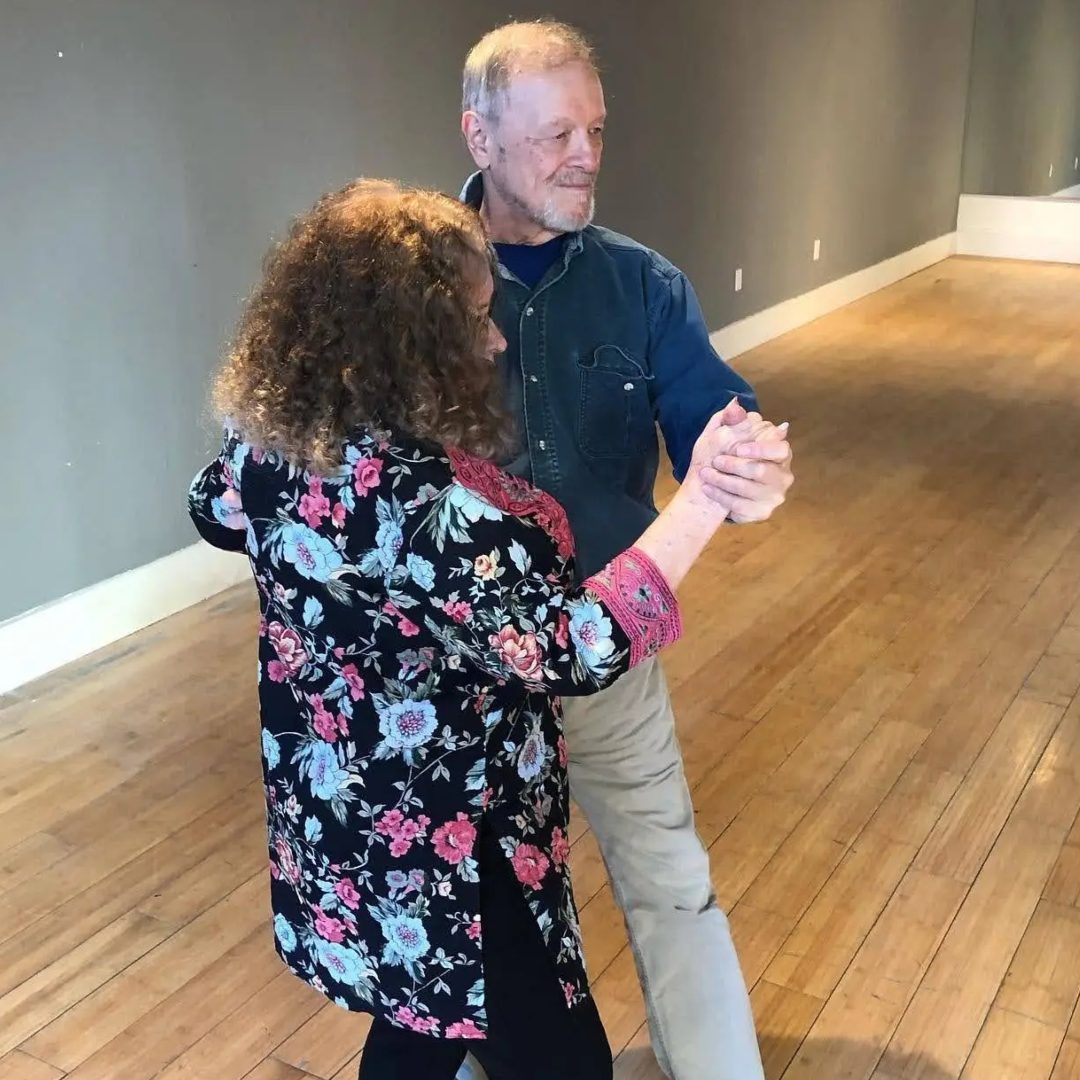
Ballroom dancing for seniors improves balance, keeps your mind busy learning new patterns, and gives you a weekly reason to get out and meet people. Starting is simple: book a private lesson, pick a style and let your teacher adapt each step to your knees and hips.
This guide explains what changes when you start after 55, how safe it is, and which dances to learn first. It also covers how to remember steps between lessons and where to find senior dancing classes in Philadelphia that fit your schedule.
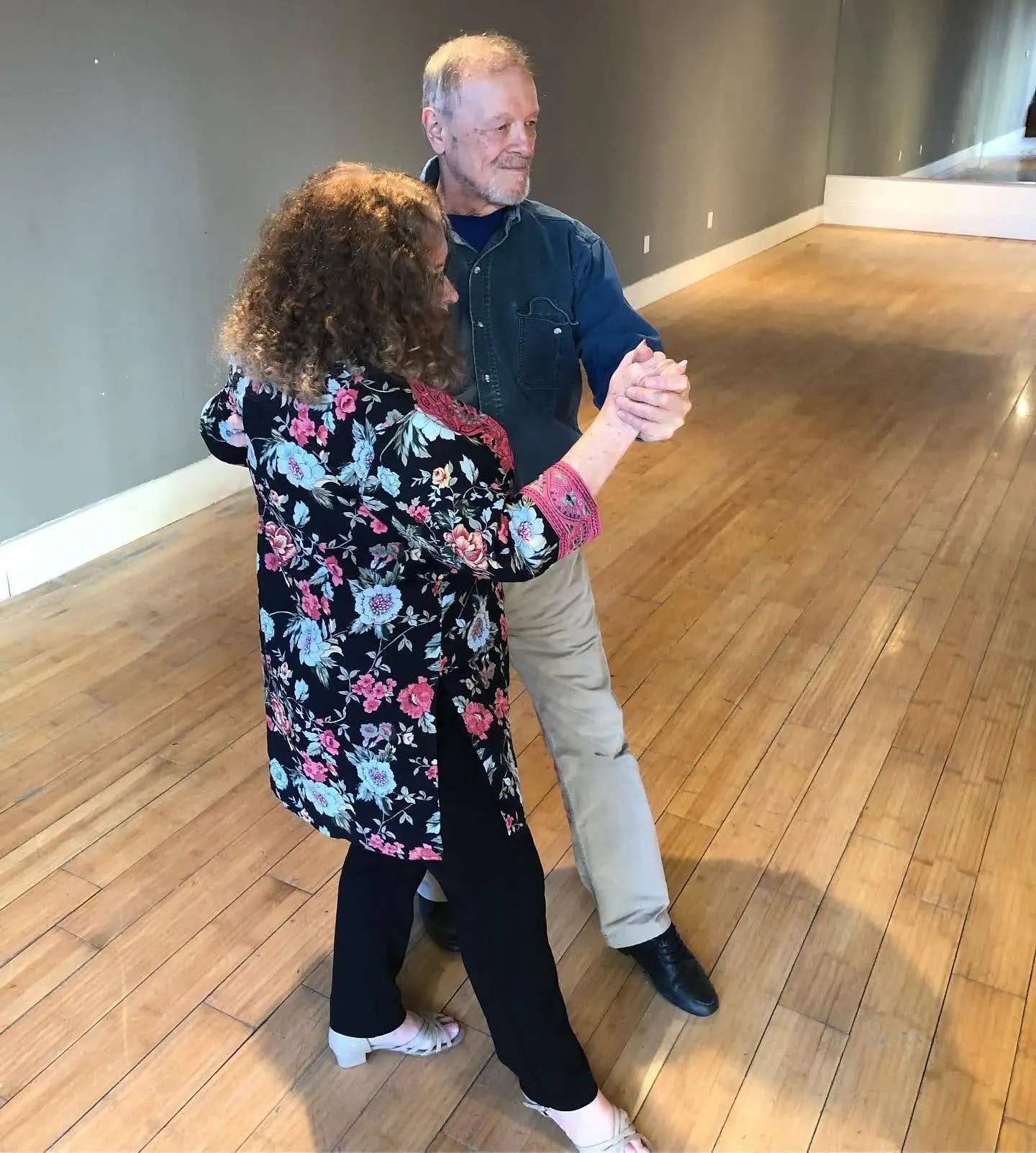
What Changes When You Start Ballroom Dancing After 55?
What you can learn barely changes after 55. What changes is how a good studio should teach you.
This is our approach:
- Smaller steps and softer turns. We shorten your stride, swap spins for a simple walk-around, and leave out dips. You still learn the same pattern.
- A pace that never feels overwhelming. In our beginner ballroom dance classes for adults, we build your dancing in small steps and never ask you to learn a whole routine at once. We practice each new figure with you until it feels comfortable, and only then add the next one.
- A beat you can feel. If you have hearing loss, we face you and tap the beat on your hand.
If you have a heart condition, joint replacement or balance problem, check with your doctor first. Then tell your instructor, so they can plan around it.
How Safe Is Ballroom Dancing for Seniors?
Ballroom dancing for seniors is low-risk for most healthy adults, because the steps stay close to the floor and you control the speed.
Let’s take a look at what the research says:
| Question | What the research says |
| Does it count as a weekly exercise? | Yes. If dancing gets you a little out of breath but you can still chat, it counts as moderate exercise. The CDC recommends that adults over 65 get 150 minutes of moderate exercise a week, about 2.5 hours, plus some balance practice. Dancing gives you both. |
| Does it improve balance? | Yes. A 2022 review of many studies found that older adults who danced scored better on balance tests than those who didn’t. The tests included standing on one leg and getting up from a chair to walk (Blanco-Rambo et al., 2022). |
| Does it prevent falls? | Not proven yet. A 2024 review of 41 studies couldn’t confirm that dancing leads to fewer falls in everyday life (Lazo Green et al., 2024). Better balance helps, but it isn’t a guarantee. |
How we keep our lessons safe for seniors
A few simple habits do more for your safety than which dance you choose. Here’s what we do in every lesson:
- We practice on a wood floor. Wood gives a little under your feet, so it’s easier on your joints than tile or carpet.
- You set the pace. Take a break whenever you need one. We keep the first lessons gentle and build up as your stamina grows.
- We leave out dips and lifts until you feel strong and steady enough to try them.
Dancing does more than build balance. It also helps with mood and memory. Read about it in our post on the science-backed benefits of dancing for adults.
Which Ballroom Dances Are Best for Seniors to Start With in Philadelphia, PA?
The best first ballroom dances for seniors are the Foxtrot and Waltz if you want a smooth style, or the Rumba and East Coast Swing if you prefer a rhythm style. All four use simple step counts and can be danced slowly.
Smooth dances travel around the room in long, flowing steps. Rhythm dances stay mostly in one spot, with smaller steps and more hip action.
Faster styles like the Viennese Waltz and Mambo can wait until you feel steady.
| Dance | Feel | Why it suits beginners | Type |
| Foxtrot | Smooth, travels around the room | The basic step is close to walking: slow, slow, quick, quick | Smooth/Standard |
| Waltz | Graceful, rises and falls | A six-step “box” pattern repeats, so it is easy to remember | Smooth/Standard |
| Rumba | Slow, romantic Latin | Small steps on the spot, with little travel across the floor | Rhythm/Latin |
| East Coast Swing | Bouncy, playful | A short six-count pattern that fits oldies and big-band songs | Rhythm |
A step count is the rhythm you say in your head, like “slow, slow, quick, quick.” Your teacher will count out loud until it sticks.
How to Start Ballroom Dancing for Seniors
Most people searching for dance classes for senior citizens picture a group class. But for most seniors, private lessons are the better first step, for three specific reasons:
- Every move can be adapted to your knees, hips or balance. In a group, the step is the same for everyone.
- You can book daytime hours. Our private dance lessons in Philadelphia run on weekday afternoons and Saturday mornings and afternoons. They cover the Waltz, Foxtrot, Rumba and other ballroom styles. Our evening group classes focus on West Coast Swing, Salsa and Bachata.
- You can bring your own group. If three or more friends, neighbors or club members want to learn together, we can create a private group class for you.
How to Remember the Steps Between Lessons
Forgetting a pattern by next week is a common frustration for older beginners. Ballroom dance lessons for adults stick faster with three simple habits:
- Film the last two minutes. Ask your teacher to dance the new pattern once while you record it on your phone. Watch it the next morning.
- Write down the figure names. A short list like “box step, left turn” helps you ask for exactly the right review.
- Start each lesson with a recap. Five minutes on last week’s pattern saves relearning it from scratch.
If you are brand new to dancing, our guide to dance classes for adults with no experience answers more first-timer questions.
Shoes for Your First Ballroom Dance Class
You don’t need to buy anything special for your first dance lesson. Pick a pair from your closet that:
- Has a smooth sole, like leather-soled loafers, dress shoes or flats. These let your foot turn with your knee.
- Has a low heel, no higher than 1.5 inches, so your weight stays over your feet.
- Stays on your foot. Skip flip-flops, backless slippers and loose sandals.
Leave rubber-soled sneakers at home. Rubber grips the floor, so your foot stops while your knee keeps turning. That twist is hard on sore or replaced knees.
When to Buy Dance Shoes
Once you’ve decided to keep dancing, a pair of dance shoes is the first thing worth buying. They have suede soles, which let you turn smoothly without slipping. If you wear orthotics, ask about dance sneakers, which are cushioned and fit inserts. Bring your shoes to a lesson, and we’ll help you check whether they’re right for you before you buy.
Take Your First Ballroom Lesson in Philadelphia, PA This Month
Our new-student offer is the easiest way to try ballroom dance lessons for seniors. For $59, you get two 30-minute private lessons and a ticket to one of our dance socials. We’ll pair you with an instructor who goes at your pace, and you can book on a weekday afternoon or a Saturday if that’s easier for you.
Once you’ve learned a few steps, come and practice them at a relaxed social. You’ll find the dates on our upcoming events page.
Ready to give it a try?
Call us at (267) 609-9340 or email info@conciergeballroom.com, and we’ll help you book your first lesson.
Senior Dance Classes in Philadelphia, PA: Common Questions
Can I Dance After a Hip or Knee Replacement?
Often, yes, once your surgeon or physical therapist clears you for activity. Ask them which movements to avoid, such as deep bends or pivoting on the new joint. Most dancing lessons for seniors can then be planned around those limits.
Can I Start on My Own If I’m Widowed or Single?
Yes. In private lessons, you dance with your instructor, so you never need to bring anyone. Once you know a few steps, studio socials let you dance with other students too.
Can We Learn as a Couple Before a Family Wedding?
Yes. Couples dance classes in Philadelphia are a good way to prepare for a milestone, like a grandchild’s wedding or a big anniversary. Tell us the date and the song, and we will plan your lessons backward from it.
Where Is Concierge Ballroom?
We are at 30 South 7th Street in Center City, a few blocks from Independence Hall. From anywhere in the city or the suburbs, we are an easy trip by car or SEPTA.